A celebrity can make an unfamiliar gambling brand look familiar. That is the commercial attraction: a casino borrows recognition from a singer, athlete or online personality. Yet a famous spokesperson tells viewers nothing about the operator's licence, withdrawal rules or suitability for New Zealand customers.
A celebrity can make an unfamiliar gambling brand look familiar. That borrowed recognition is the point of an endorsement, but it is not evidence about an operator, the odds or a customer's likely experience. To assess a campaign, separate its promotional reach from what it can actually establish.
What counts as a casino endorsement?
An endorsement links a recognisable person to a gambling brand. It might be a television appearance, a branded Instagram post or an interview filmed for YouTube. Approval need not be spoken aloud: a paid appearance or repeated association can do much of the work.
A brand ambassador often appears across several campaigns. A sponsorship generally pays for association with a team, tournament, broadcast or individual, sometimes through a shirt logo or venue signage. The arrangements can overlap, but a football-shirt sponsorship is not the same thing as a personal recommendation.
Influencers may have smaller audiences than internationally known athletes, yet followers can treat their posts as personal recommendations. Affiliate links and promotional codes add a different incentive: compensation tied to referrals. A casual-looking story may therefore be an advertisement.
Why gambling brands seek famous faces

Famous athletes bring an existing sports audience. Musicians and streamers reach people through entertainment and online communities. A casino logo seen on broadcasts, short videos and social feeds can become recognisable long before viewers investigate the gambling product itself.
Visibility is not effectiveness. Ad recall, social engagement, registrations and gambling activity measure different things. A viral campaign may attract attention without building informed trust. Claims about results need actual campaign data, not just follower counts.
There is a catch: affection for a celebrity can be mistaken for confidence in the operator. A famous name cannot verify payout terms, identity checks, complaints procedures or local authorisation. Some followers will also be under 18.
Real examples: what well-known partnerships actually show

Neymar Jr and Cristiano Ronaldo - PokerStars
PokerStars announced Neymar Jr and Cristiano Ronaldo as ambassadors in May 2015. Both footballers appeared in branded poker promotions intended to reach audiences beyond established poker fans.
Those deals concerned poker, not necessarily online casino products. PokerStars has also worked with Rafael Nadal, Ronaldo Nazário and professional player Daniel Negreanu at different times. None of these historical relationships proves that an endorsement remains active or is lawful advertising in New Zealand.
Drake, Stake and the limits of global visibility
Drake has been publicly associated with Stake. The gambling brand has also pursued visibility through sport, including its historic Everton FC shirt sponsorship. In January 2025, The Guardian reported UK scrutiny of Stake-related social media advertising connected with football. The case raises a practical question: who is responsible when a sponsorship logo travels from a match broadcast into promotional social content?
Neither Drake's international association nor an English football sponsorship establishes that Stake may advertise an online casino in New Zealand. Product, audience location, publication date and local rules all need checking.
US casino advertising and the problem of category confusion
US gambling campaigns have featured Jamie Foxx with BetMGM and John Stamos with DraftKings Casino. Industry coverage has also discussed Paris Hilton and WOW Vegas. These examples belong to their original markets and dates. Brands such as FanDuel and Caesars should not be assigned a celebrity relationship without a specific supporting campaign record.
The product category matters as much as the famous face. WOW Vegas, Chumba Casino and Global Poker use sweepstakes models; sportsbook advertising concerns bets on sporting outcomes; poker promotions differ again. None should automatically be described as a conventional real-money online casino endorsement.
New Zealand law: why the advertising format matters
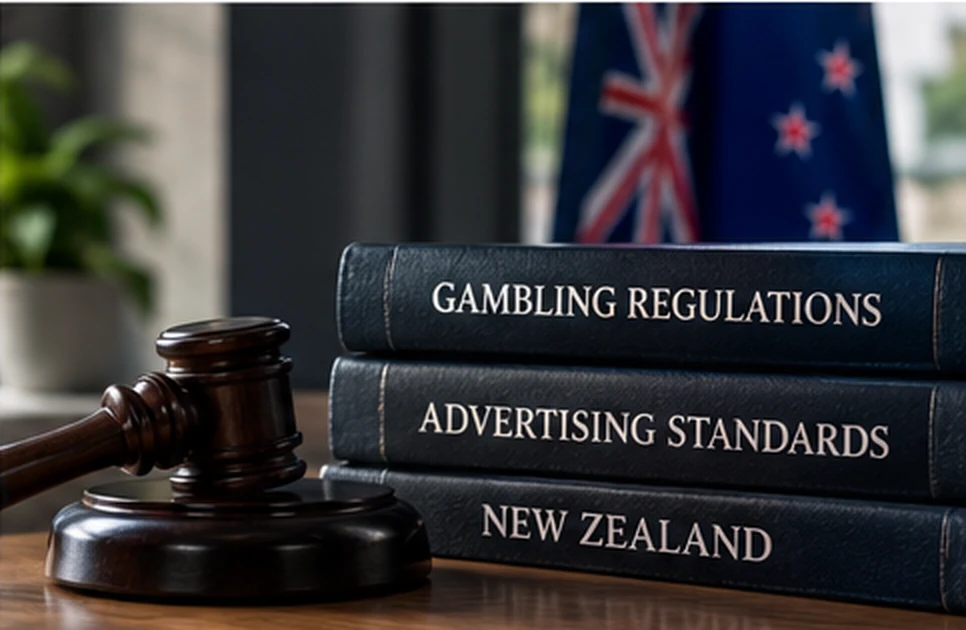
The Gambling Act 2003 restricts advertising overseas gambling in New Zealand. The Online Casino Gambling Act 2026, in force from 1 May 2026, introduced a dedicated online casino framework. DIA expected licensing to finish in early 2027, with up to 15 licences available. That timetable does not mean an overseas operator already holds New Zealand advertising permission.
The Online Casino Gambling Regulations 2026 commenced on 3 July 2026. Regulation 40 prohibits particular forms of online casino advertising, including the following:
- Sponsorship: prohibited advertising includes sponsorship of a person, team, event, broadcast or other thing, with examples involving branding on clothing, equipment and event identities.
- Personal endorsement: advertisements that involve, or appear to involve, endorsement of an operator or platform are prohibited. This applies to depictions of real or fictional people and artificial representations.
- Affiliate marketing: advertisements involving an affiliate arrangement are prohibited, including referral-based promotions within the regulation's definition.
- Misleading gambling messages: separate restrictions cover claims about luck, skill, financial improvement and other representations that could mislead consumers about gambling outcomes.
A paid-partnership label makes sponsorship more transparent; it does not make a prohibited advertisement legal. Calling a promotional video a personal opinion cannot by itself change its commercial nature.
DIA has described takedown powers and pecuniary penalties of up to NZ$5 million for specified breaches. Legal responsibility can reach beyond the casino operator, depending on the conduct and the statutory provision.
A local enforcement example: influencer promotions
New Zealand media reported a NZ$5,000 fine involving Auckland influencer Millie Elder-Holmes in 2025 over offshore gambling promotion. Further matters were contested in reporting from 2026; a disputed allegation should not be presented as a final finding.
The format is easy to miss. An Instagram story or livestream may promote an overseas casino while looking like everyday entertainment. Overseas payment, hosting or management does not automatically resolve questions about advertising aimed at New Zealand audiences.
How to recognise a commercial gambling endorsement
Viewers usually cannot see the contract behind a gambling post. These signs may indicate paid promotion, although none alone decides whether a post is unlawful:
- Brand prominence: a casino name, logo, branded clothing or on-screen graphic is repeatedly placed near the celebrity or creator.
- Promotional direction: viewers are invited to register, follow a link, enter a code, claim an offer or watch a gambling livestream.
- Commercial disclosure: labels such as “paid partnership” or “advertisement” indicate a disclosed relationship, but their absence does not prove independence.
- Repeated coordination: several posts use similar wording, visual templates, hashtags, timing or brand assets.
- Claims about results: unusually large wins, implied skill in games of chance or messages suggesting gambling will improve someone's lifestyle deserve particular scrutiny.
Check the product next. Slots, roulette and blackjack signal casino gaming; football odds signal sports betting; a poker tournament has its own format. Shared branding does not make these products interchangeable.
What celebrity marketing cannot tell you about a casino
An endorsement offers no independent proof of fair games or consumer protection. For an online casino aimed at New Zealand, check its status with DIA when the licensing register becomes available. Read withdrawal conditions, age-verification procedures, dispute routes and harm-prevention measures rather than relying on the ambassador.
Campaign geography can change after publication. Reposts, paid boosting and recommendation algorithms may put a message before New Zealand viewers even if the agreement was signed overseas. Advertisers need to check where their content actually appears.
Young audiences, sporting identity and gambling harm

Sporting stars and musicians often attract young followers who were never looking for gambling content. The Advertising Standards Authority's Gambling Advertising Code sets social-responsibility requirements, including protections for children and young people. The Problem Gambling Foundation of New Zealand has also raised concerns about gambling advertising.
A club shirt can repeat a gambling logo across matches and highlights. An influencer can insert the same brand into what feels like a conversation with followers. Exposure does not mean every viewer will gamble, but these formats can make commercial intent less obvious.
Casino play can cause financial harm; it is not a way to earn dependable income. Anyone affected by gambling can seek support from the Problem Gambling Foundation or New Zealand health services. Where advertising itself is prohibited, a responsible-gambling footer does not cure the breach.
Five questions that settle most endorsement claims
| Question | Why it changes the interpretation |
|---|---|
| Is the promotion for an online casino, poker or sports betting? | These are not interchangeable products or legal categories. |
| Is the celebrity relationship current or historical? | An old announcement does not establish a live contract. |
| Is there payment, sponsorship, referral compensation or brand control? | Commercial ties can turn entertainment into an advertisement. |
| Is the audience in New Zealand? | Local advertising restrictions can matter even when the campaign began overseas. |
| Is the claimed approval supported by the operator and independent records? | Celebrity recognition does not verify legality, licensing or product safety. |
Frequently asked questions
Can celebrities advertise online casinos in New Zealand?
As at October 2026, DIA states that online casino advertising to New Zealand audiences is prohibited pending licensing. The 2026 regulations also prohibit personal-endorsement advertisements within the future licensed advertising regime. A celebrity's fame does not create an exemption.
Are casino sponsorships the same as celebrity endorsements?
No. Sponsorship typically buys association with a person, club, event or broadcast. An endorsement presents a person's approval or support for a brand. The distinction is useful for analysing international campaigns, but both are restricted advertising methods under New Zealand's online casino regulations.
Does a paid partnership make gambling ads legal?
No. Disclosure helps identify an advertisement; it does not override a prohibition on the advertisement's format or product. An affiliate code, logo placement or seemingly personal testimonial may still create compliance issues.
Does a celebrity deal make a casino legal in NZ?
No. International partnerships demonstrate a marketing relationship in a particular context. They are not evidence of an operator's New Zealand licence, consumer protections or permission to advertise locally.
Why do casinos use influencers?
Creators place brands inside existing communities and familiar entertainment formats. That can make a promotion more noticeable or relatable, but its commercial nature may be less obvious. Local law and advertising standards remain relevant regardless of whether the message appears on television or social media.