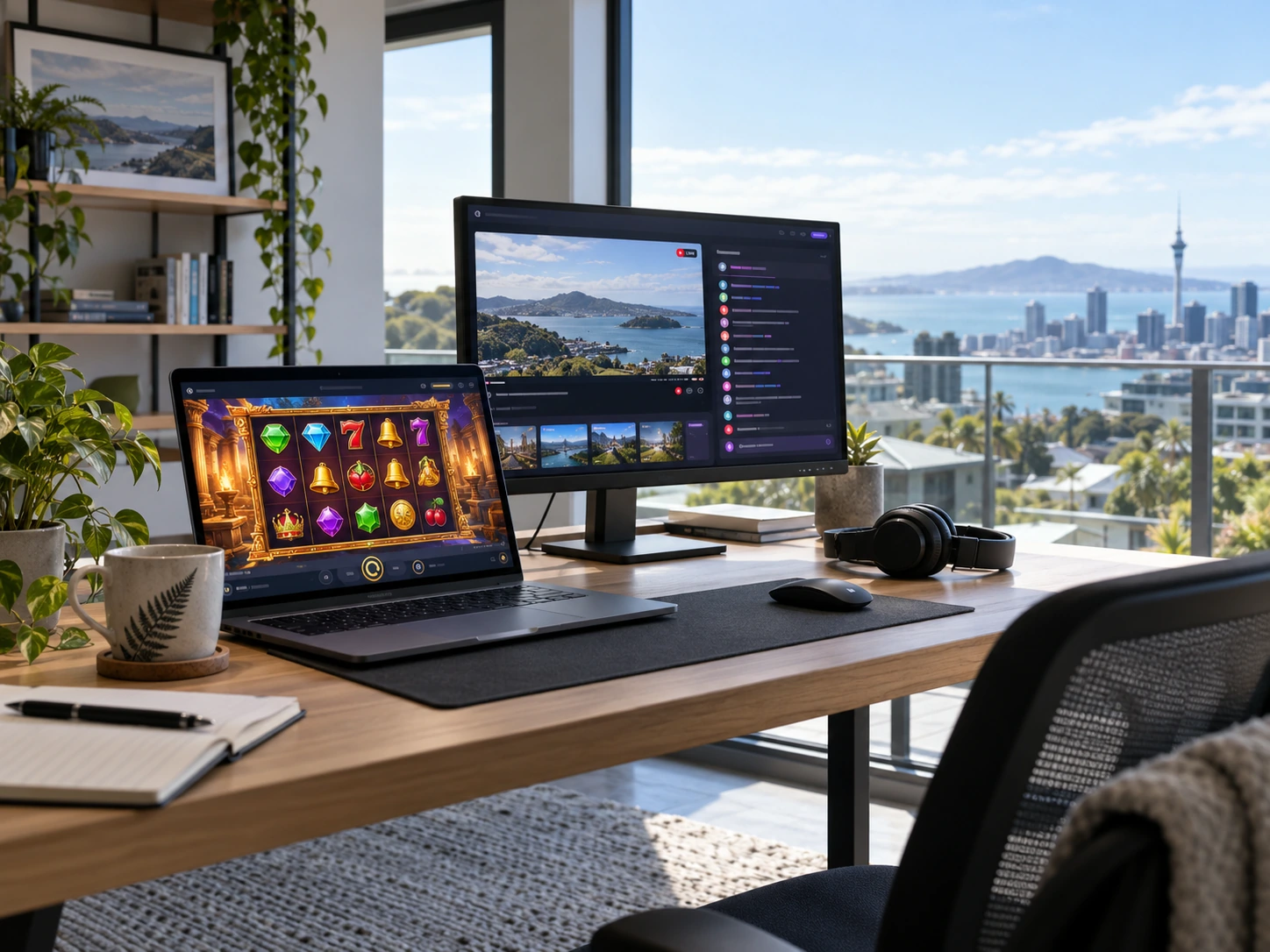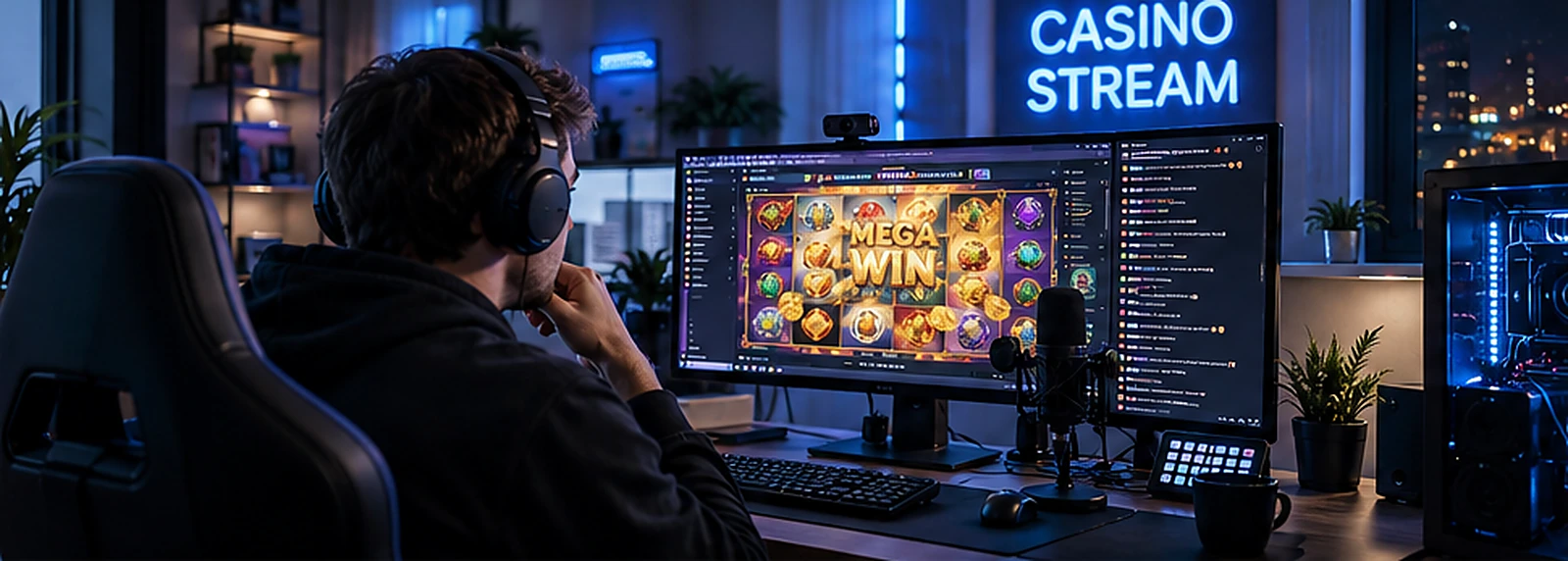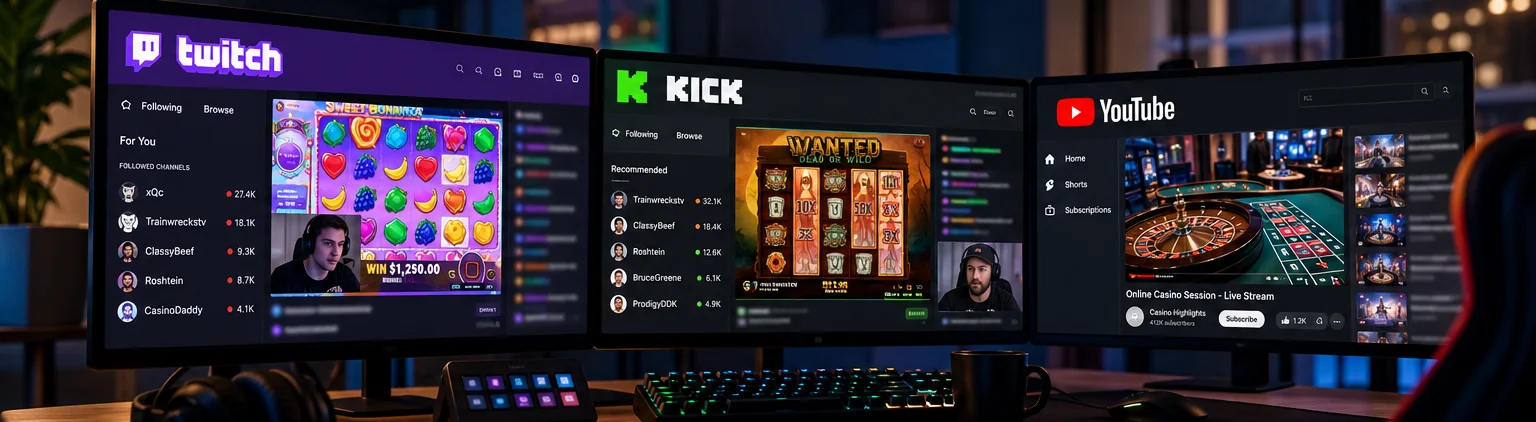
A slot jackpot fills the screen. Chat erupts. Seconds later, the streamer is betting again. The viewer has not spent a cent, but the broadcast has already framed a rare payout as the event worth waiting for. That is one way casino streams can influence viewers: they control which outcomes get attention, whose reactions seem credible and how easily a spectator can follow a promotional link to a gambling site.
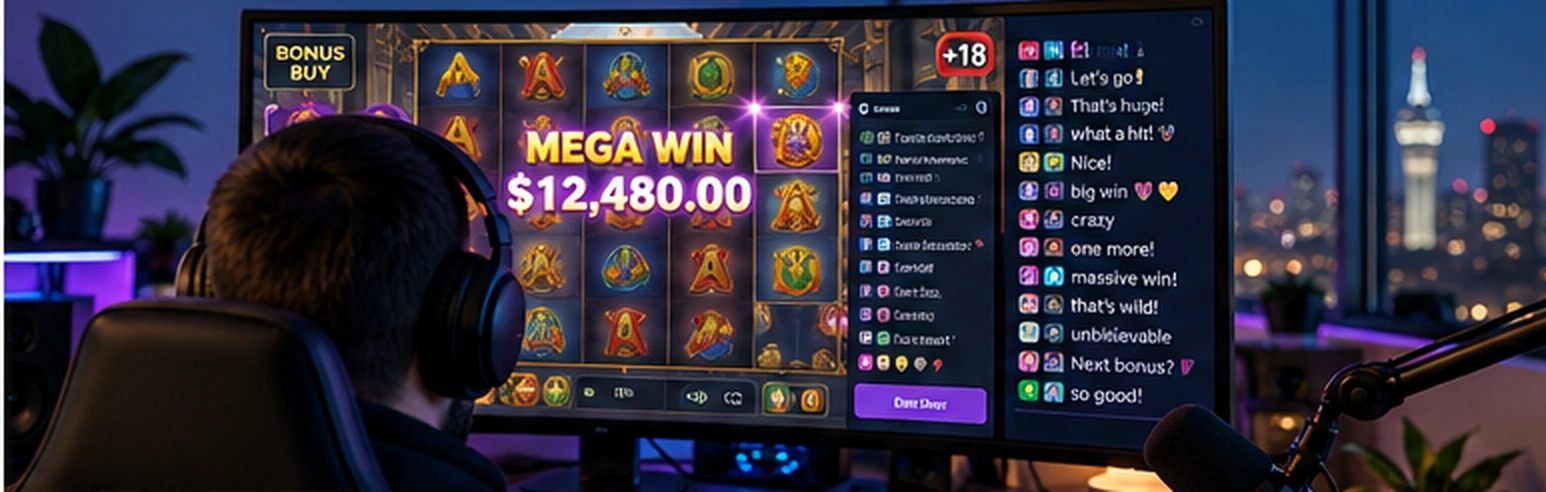
For New Zealand audiences, there is another distinction. Overseas streams may be accessible on Twitch or Kick even when a casino promotion aimed at people in New Zealand would breach local advertising rules. Watching, wanting to gamble and actually placing a bet are different outcomes; research does not measure them interchangeably.
What counts as a casino stream?
Casino streams show gambling as it happens, or replay selected moments afterwards. Slots dominate many online-casino broadcasts, but roulette, blackjack, poker and dice also feature. On Twitch and Kick, a creator may wager and talk to chat at the same time. YouTube and TikTok clips often strip that session down to a few seconds. A streamer showing a casino table is not necessarily broadcasting the same thing as an operator's live-dealer interface.
Some viewers follow a creator; others enjoy the suspense or watch without staking their own money. Even passive viewing can mean repeated exposure to betting cues and casino sponsorships.
How casino streaming changes the viewing experience
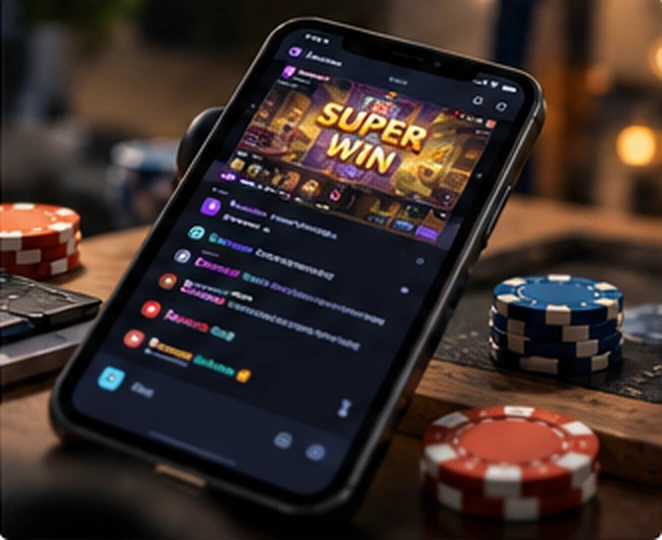
Big wins amplify excitement without changing the odds
A near miss keeps the next spin interesting. So do reel animations, jackpot sounds and the streamer's reaction. When somebody else wins, spectators may feel vicarious excitement without risking their own money. Fast play gives that feeling little time to fade before the next hand or spin.
The odds stay the same. Return to player (RTP) describes a game's theoretical long-run return, not what one session will pay. The house edge and short-term variance still apply. Edited jackpots conceal the uneventful spins and losing runs; survivorship bias and the availability heuristic help explain why the spectacular outcome sticks in memory.
Imagine a creator celebrating a NZ$20,000 payout. Did the session begin with NZ$2,000 or NZ$50,000? What did earlier spins cost? Was the balance supplied under a promotional deal? Without stakes, losses and account terms, the number on screen says little about the streamer's net result, let alone a viewer's likely outcome.
Parasocial relationships make messages feel personal
A regular viewer recognises the jokes, the schedule and even the way a creator reacts to a loss. A greeting in chat can make that familiarity feel mutual. Researchers call this a parasocial relationship: a viewer feels connected to somebody who may know almost nothing about them. Familiarity can become trust, including trust in claims about gambling.
A creator might call a slot 'hot' or suggest that roulette is due for a particular result. Neither claim makes random-number-generated slots or independent roulette spins predictable. The illusion of control starts when confidence in the speaker replaces evidence about the game. A friendly voice does not alter probability.
Live chat turns individual risk into a group event
Watch what happens in chat after a big win. Emojis arrive, viewers ask for another spin and donations may reward the spectacle. That visible approval is social proof. It can make large wagers look more normal than they would outside the stream, although some chats challenge risky claims and discuss the odds. Moderation determines which reactions remain visible.
The chat does not need to urge anyone to gamble. Group celebrations can make large wagers seem routine; fear of missing out (FOMO) keeps some viewers watching for the next payout.
Do casino streams actually make people gamble more?
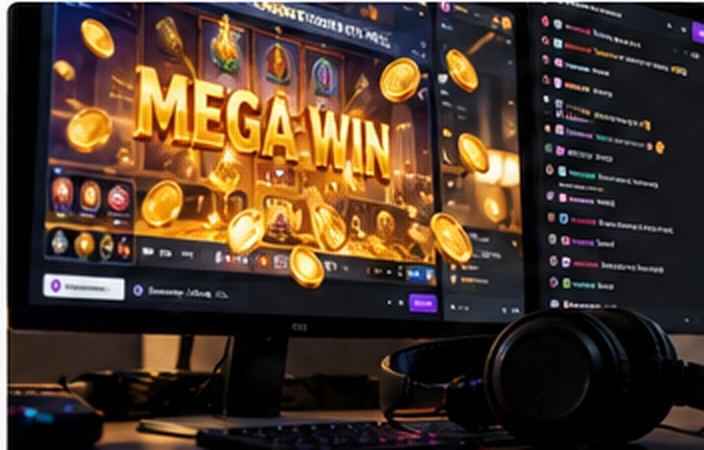
The evidence points to a relationship between viewing and gambling urges, not a simple cause-and-effect rule. In a 2024 study, Raymond Wu, Brett Abarbanel and Luke Clark compared 221 viewers with 642 non-viewers who gambled, then separately surveyed 271 stream viewers. Viewers reported stronger gambling cravings and greater problem-gambling severity. Within the viewing group, higher Problem Gambling Severity Index (PGSI) scores were linked to stronger cravings prompted by streams.
Roughly three-quarters of those viewers had gambled with real money before watching streams. That matters: the broadcast cannot have introduced gambling to people who were already doing it. Respondents came from several countries, New Zealand among them, so the findings are not a representative picture of the New Zealand population.
A University of Sydney investigation published in April 2025 tracked 25 Twitch and Kick channels and surveyed 350 viewers. Casino links appeared alongside chat exchanges that could reinforce mistaken beliefs about gambling. Many respondents said streams made them more inclined to gamble. The survey captured what they believed about their behaviour; it did not follow their deposits or losses to prove a later increase.
The craving paradox: watching can backfire
Some spectators choose livestreams precisely because they want to avoid placing a bet. There is no personal stake in watching. Yet slot sounds, spinning reels and jackpots can bring an urge back rather than settle it. Wu and colleagues found that some viewers described both aims: controlling cravings by watching and feeling cravings while they watched.
One viewer closes the stream and moves on; another opens a betting account. Existing gambling problems, stress and reasons for watching may help explain the difference. Streams are not a proven substitute for gambling treatment.
Why sponsorships and affiliate links matter
Subscriptions, donations and advertising may pay a streamer, but casino sponsorships and affiliate marketing introduce a more direct conflict. A referral code or bonus link can earn a creator money when a viewer signs up or plays, depending on the arrangement. It also makes the move from watching to registering easier.
A promotional balance may not behave like cash that an ordinary customer deposited. Nor does a visible account balance show who funded it, which terms apply or whether the creator is ahead overall. Sponsorship disclosure helps viewers interpret the pitch; it does not undo the excitement of seeing a jackpot.
Stake.com, Rollbit, Duelbits, Roobet, Blaze and Gamdom are names encountered in discussions of casino streams. Trainwreckstv and Roshtein are associated with the format. Their mention does not imply endorsement or lawful availability in New Zealand.
Twitch, Kick and short clips reach viewers differently
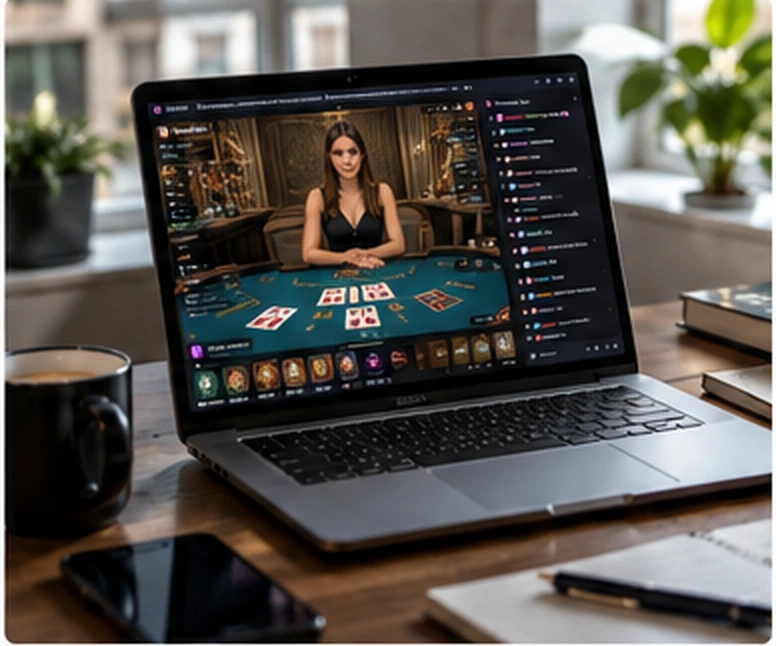
Twitch restricts streaming and promotion involving certain gambling sites and offers content classification tools. Kick applies its own gambling-content guidelines. A platform can permit a broadcast while New Zealand law still prohibits a particular advertisement. An age label also says nothing about an operator's local licensing status.
Clips and long streams create different blind spots. A TikTok or YouTube highlight can show a win without the hours of losing play. A full broadcast may reveal more losses but keep viewers immersed in chat and repeated wagers. Duration alone is not a measure of safety.
| Format | What a viewer sees | What can be easy to miss |
|---|---|---|
| Full casino livestream | Continuous play, personality, live chat | Financial arrangements, long-term net results and cumulative exposure |
| Edited jackpot clip | Peak excitement and a memorable win | Unshown attempts, losses and selection bias |
| Sponsored stream | Creator endorsement and casino branding | Commercial incentives and differing player conditions |
| Live-dealer game broadcast | Real-time table action and dealer interaction | House edge and the distinction between observing and participating |
NZ rules: viewing differs from promotion
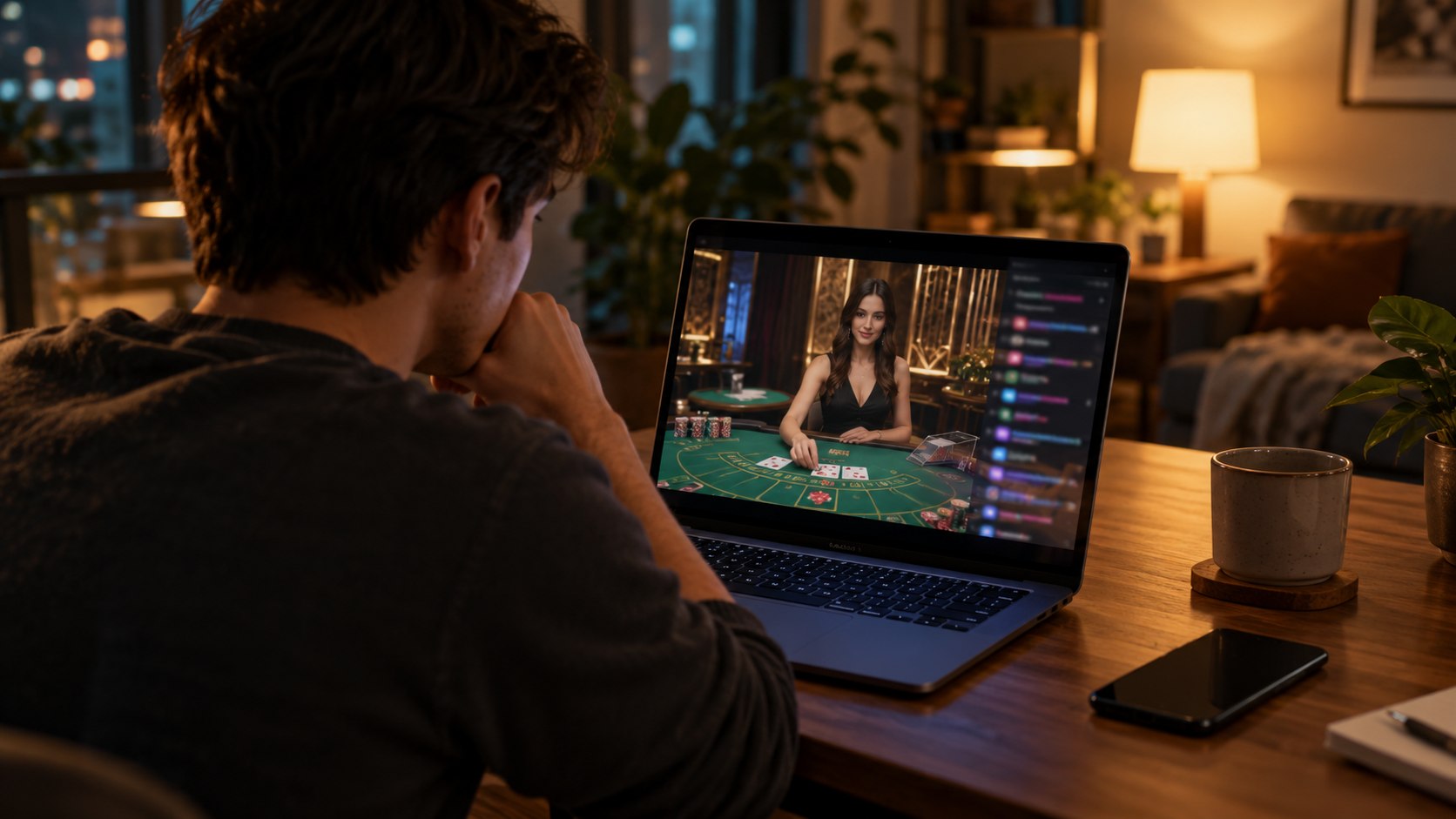
Watching a stream is different from being targeted by a commercial invitation. A paid or affiliate pitch is the relevant signal, not the platform's availability; the Department of Internal Affairs' advertiser guidance covers online-casino promotions reaching New Zealand.
According to the DIA, the licensing process is expected to finish in early 2027. Up to 15 licensed operators may then advertise under restrictions. The regulatory approach prohibits affiliate marketing and paid endorsements; overseas sponsorship habits do not show what New Zealand permits.
Simply viewing an overseas broadcast differs from publishing an unlawful casino advertisement. A creator's country, platform or age restriction does not settle whether a promotion targets New Zealanders lawfully. Casino rules also differ from those for authorised sports and race betting. The DIA's October 2026 provider guidance sets out the licensing transition.
Who may be more affected by gambling streams?
Previous gambling habits, stress and money worries can affect how somebody responds to a stream. Younger viewers need particular care: a creator-led format may look like ordinary gaming content even when money is at risk. An 18+ label and chat moderation can limit exposure, but neither prevents every underage view.
For somebody already struggling with gambling, a jackpot clip may be a trigger. Watching to escape money worries can feel like relief without addressing those worries. The consequences of gambling-related harm can extend beyond debt to sleep, relationships and mental wellbeing.
Support also has to make sense locally. Māori, Pacific and other New Zealand communities should have access to appropriate help, without assuming everyone within a community gambles or responds in the same way.
A practical way to judge a casino stream
Before trusting what you see, check what was left out, how the stream affects your urge to bet and whether the creator benefits from sign-ups.
- Check the full picture. Are losing sessions shown, or only highlights? Are stakes, net outcomes and promotional arrangements clear? A large jackpot without context is not a probability estimate.
- Identify the influence mechanism. Is your excitement coming from the game, the creator's personality, chat encouragement or the anticipation of a reward? Recognising social proof makes it easier to separate the group's enthusiasm from your own judgement.
- Notice the after-effect. After viewing, do you feel entertained and able to move on, or preoccupied with making a deposit, recovering losses or copying a creator's bets? The change in urge matters more than how relaxed the stream felt while watching.
- Inspect commercial cues. Sponsorship messages, bonuses, referral links and discount-style codes are promotions rather than independent evidence about a game or operator.
- Act on warning signs. If streams repeatedly prompt unplanned gambling, consider muting or unfollowing channels, limiting exposure and using available gambling-support or self-exclusion services. Avoid treating viewing as a proven substitute for gambling treatment.
New Zealand's Gambling Helpline offers confidential support to people concerned about their own gambling or somebody else's. It is worth seeking help before losses become severe.
Frequently asked questions
Can watching slots make me want to gamble?
Yes, for some people. Studies have linked viewing to cravings, though they do not establish that every spectator will gamble.
Do casino streamers use real money?
Not necessarily. Streams may involve personal funds, sponsored play or promotional balances. A number on screen cannot tell you who paid for the wagers. Check what has actually been disclosed about the account and any sponsorship.
Are Twitch and Kick casino streams safe for younger viewers?
Age labels, moderation and content categories help, but gambling clips can reach younger viewers through reposts and external links. Neither Twitch nor Kick should be relied on as a complete barrier for minors.
Is watching a casino stream legal in New Zealand?
Watching an overseas stream and promoting a casino to New Zealanders are separate legal matters. Whether a promotion breaches the advertising restriction depends on its circumstances.
Can streams replace real-money gambling?
Not as a proven treatment. If watching triggers thoughts of deposits or chasing losses, stop viewing and consider specialist support.