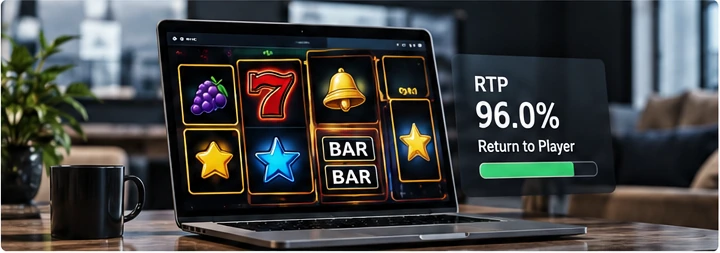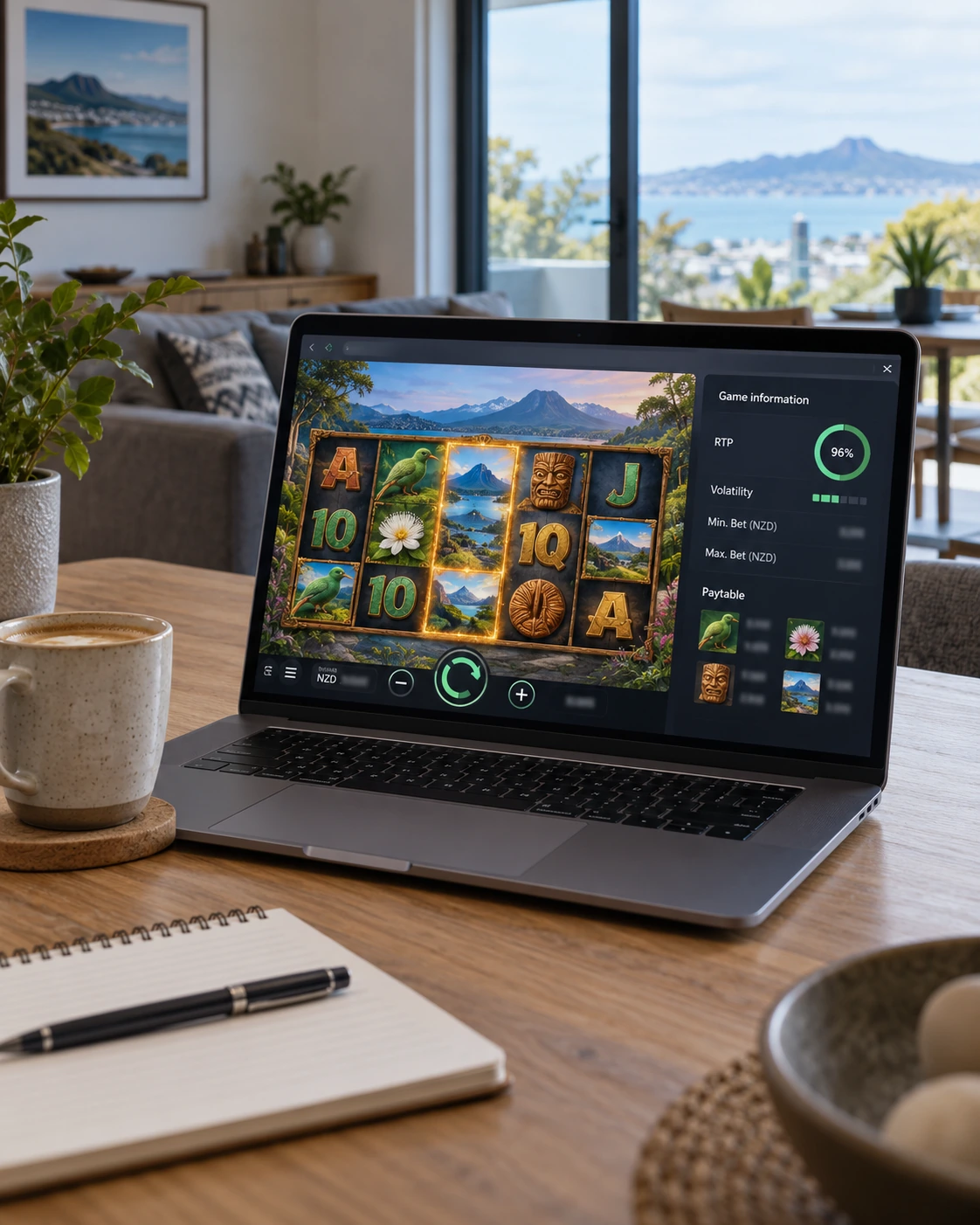
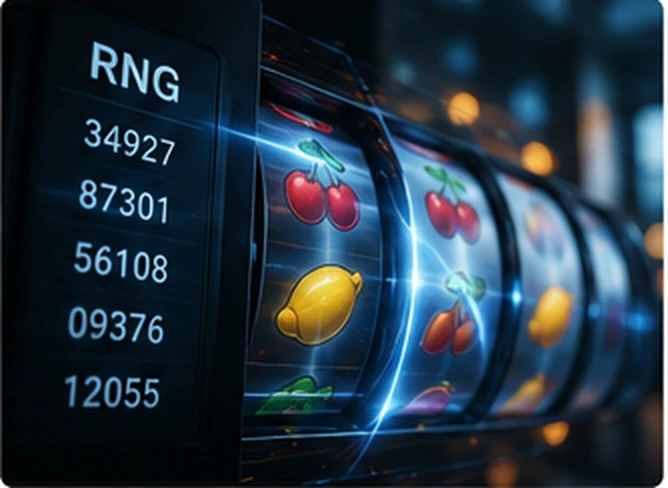
A random number generator (RNG) selects outcomes in digital casino games. It can set a pokie reel stop, shuffle a blackjack deck or roll virtual craps dice. Under the game's stated rules, it does not use venue preference or player history to choose the next result.
Audited Unpredictability
A certified RNG does not produce 'fair' results in the sense that everyone wins equally. It produces mathematically unbiased results where every possible outcome conforms strictly to its predetermined statistical probability, tested across billions of data points.
PRNG vs True Hardware RNG
In software development, random number generation generally falls into two distinct architectures:
- Hardware RNG (True RNG): Derives entropy from physical microscopic phenomena, such as thermal noise in semiconductors, atmospheric electrical noise, or radioactive decay. True RNGs are predominantly used for generating root cryptographic keys.
- Pseudo-Random Number Generators (PRNG): Employs complex mathematical algorithms (such as the Mersenne Twister or cryptographically secure PRNGs) that start from an unpredictable seed and generate sequences of numbers that exhibit flawless statistical randomness.
How Testing Laboratories Certify Games
No legitimate gaming operator writes their own RNG algorithms. Instead, software providers submit their code to accredited, independent testing agencies such as eCOGRA, BMM Testlabs, Gaming Laboratories International (GLI), and iTech Labs.
These laboratories subject the RNG to rigorous statistical batteries, including:
- Diehard Battery of Tests: A suite of statistical tests designed to detect subtle non-random patterns, birthday spacings, and overlapping permutations.
- Chi-Square Distribution Analysis: Confirms that outcomes match their theoretical frequencies across sample sizes exceeding 100 million iterations.
- Independence Verification: Ensures that outcome $N+1$ cannot be predicted from outcome $N$, even with complete knowledge of prior results.
| Auditing Agency | Accreditation Scope | Key Testing Domains | Primary Jurisdictions |
|---|---|---|---|
| eCOGRA (UK/Malta) | ISO/IEC 17025 | RNG compliance, payout percentage auditing | UK, EU, International |
| BMM Testlabs | Global Certification | Land-based EGM standards, online RNG | Australia, New Zealand, US |
| GLI (Gaming Labs Int.) | Global Standard Testing | Hardware cabinet testing, lottery systems | Worldwide |
Regulatory Standards in New Zealand
Under New Zealand's Department of Internal Affairs guidelines, Class 4 gaming machines in taverns and clubs must use approved EGM software sealed with cryptographic checksums (SHA-256 or MD5). If a venue owner or technician tampers with a game's circuit board or software ROM, the checksum mismatch causes an immediate fatal hardware lockout.