
A jackpot flashes on a phone. A countdown says the offer ends tonight. Beneath the excitement, the chance of losing money has not changed. The psychology behind gambling ads lies in that gap: promotions make possible rewards easy to picture while costs and probabilities receive less attention.
In Aotearoa New Zealand, the distinction also has legal consequences. Advertising online casino gambling to people in New Zealand is currently prohibited as the new licensing system is introduced. Techniques used overseas are not necessarily lawful here.

What gambling advertising is trying to change
An ad can put a brand in someone’s mind, make a bonus seem safer, or prompt an existing gambler to return. These outcomes are not interchangeable: recalling a campaign does not establish that someone deposited money.
A 2026 qualitative systematic review associates gambling marketing with attitudes and engagement, although findings vary by audience and format. Evidence from sports betting or lotteries cannot simply be transferred to online slots. Read the systematic review .
Reward anticipation: selling possibility, not odds

Spinning reels, jackpots and winning celebrations focus attention on the possibility of a payout. Reward-related cues can engage learning and motivation, processes involving dopamine. But there is no evidence that every gambling ad delivers the same chemical “hit” to everyone.
Casino games may use variable rewards : outcomes remain unpredictable. That describes the game, not the ad. An advertiser can still borrow reels, reveals and prize symbols to evoke anticipation. For someone with a gambling history, familiar sights or sounds may also become conditioned cues. The American Psychological Association's overview of gambling and the brain explains reward learning and gambling.
Five psychological triggers in gambling promotions
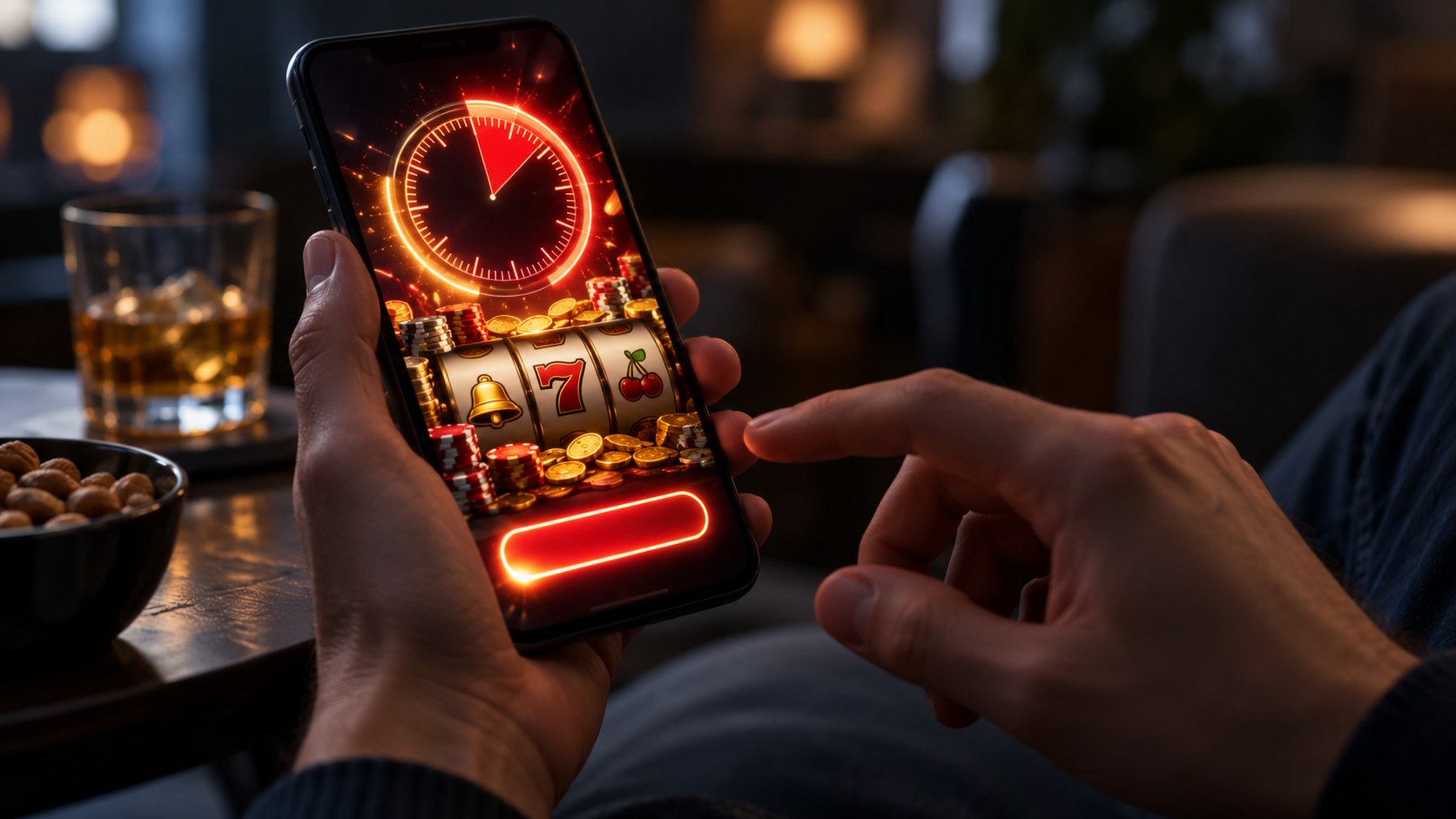
1. FOMO, scarcity and urgency
“Only tonight” and countdowns can provoke fear of missing out (FOMO) . A ticking clock leaves less room to check the conditions, but it does not improve the chance of winning. New Zealand’s Gambling Advertising Code addresses misleading claims of urgency.
2. Social proof and normalisation
Testimonials, influencers, celebrity endorsements and sponsorship can make gambling appear normal or socially approved. That is social proof , not evidence of better odds. Research on sports sponsorship may help explain normalisation; it cannot establish the effect of an online-casino ad.
3. Positive framing and selective attention
Advertisements show winners far more readily than ordinary losses. This positive framing draws on the availability heuristic : a vivid outcome can feel common simply because it is easy to remember. A screenshot of a large prize reveals nothing about how often it occurs.
4. Loss aversion and the feeling of wasted opportunity
Loss aversion helps explain the pull of “don’t lose your bonus”. Someone can feel they are giving up value even though they have not spent or won anything. The wording turns a choice about whether to gamble into a choice about whether to miss out.
5. Personalisation and cue reactivity
Platforms can tailor messages using audience data and previous behaviour. A gambling notification received during financial stress or recovery may be particularly unwelcome. Cue reactivity describes responses, sometimes including cravings, to reminders of previous behaviour. The response is individual, not automatic.
Colours, sounds and imagery: attention is not consent
Animated coins, bright colours, music, short videos and humour all compete for attention. Fast edits can put a jackpot centre stage while the conditions remain hard to find. Attention-grabbing design is not automatically deceptive; the problem arises when it obscures the stakes or implies a misleading chance of winning.
Cartoons, memes and pop-culture characters can make gambling resemble entertainment or social casino games. Loot boxes and free-to-play products differ from paid gambling, but shared visual cues can blur those differences for young audiences. New Zealand’s Ministry of Health research on children's exposure to gambling marketing examines exposure among children.
Why bonuses can feel more valuable than they are

Sign-up bonuses, free spins and cashback can make gambling seem cheaper than it is. The headline figure is not necessarily withdrawable cash. Check the required deposit, eligible games, expiry date, wagering multiplier, maximum stake and withdrawal restrictions.
Consider an illustrative offer of “$100 bonus funds” with a 30-times wagering requirement on the bonus amount. Meeting that condition would require $3,000 in qualifying wagers, assuming the requirement applies exactly as stated and all wagers contribute fully. That is wagering turnover, not a guaranteed loss or a promise of winnings. The example shows why the size of a bonus and the financial exposure it may encourage are different measurements.
Ignore the headline until you know what you must deposit, how much must be wagered, which games qualify and whether winnings can actually be withdrawn. Missing conditions mean the advertised value cannot be assessed.
Casino-game biases that advertisements can exploit
Some well-known cognitive biases arise inside casino games rather than advertisements. A promotion can refer to those experiences, but it does not necessarily reproduce the same psychological effect.
- Gambler's fallacy: believing a random outcome is “due” because of previous results. In independent games, a losing streak does not force a subsequent win.
- Illusion of control: overestimating how much choice, timing or personal skill can influence a chance-based result. Choosing a slot machine theme does not confer control over its random outcomes.
- Near-miss effect: experiencing an almost-win as especially motivating. Near misses occur within some games; a static casino ad showing nearly matching symbols is not, by itself, evidence of the same behavioural effect.
- Optimism bias: expecting personally favourable outcomes despite general risks. Large-prize testimonials can reinforce this perception without changing actual probabilities.
- Escalating commitment: continuing because time or money has already been invested. Advertising that encourages a “comeback” may interact with this tendency, particularly after losses.
A convincing winning story cannot change a game’s expected return. Casino play is not an investment.
Who may be more affected by gambling ads?
The impact of an ad depends partly on gambling history, exposure, impulsivity, sensation seeking and emotional state. Someone in recovery may react strongly to a familiar cue. Financial pressure can also make an improbable win seem like relief, although gambling is not a dependable answer to money problems.
Young people need particular protection: recognition of advertising and its commercial purpose develops with age. New Zealand research must also distinguish Māori, Pasifika and Asian communities rather than treating ethnicity as a diagnosis. Social circumstances and access to support matter more than broad assumptions about identity.
Many studies track reported attitudes, intentions or associations rather than proving that one ad caused one person to gamble. Match the finding to its audience, product and measured outcome.
Gambling advertising rules in New Zealand

As at 25 October 2026, online casino gambling advertising directed at people in New Zealand is prohibited. The Department of Internal Affairs (DIA) says the Online Casino Gambling Act 2026 came into force on 1 May 2026 and strengthened enforcement powers, including takedown notices and financial penalties for unlawful advertisements. The licensing scheme is being implemented in stages; DIA expects eligible licensed operators to be able to advertise, subject to restrictions, after the licensing process is completed in 2027. Advertising permissions should not be assumed before that point.
The Advertising Standards Authority (ASA) Gambling Advertising Code sets social-responsibility and truthful-presentation standards for gambling advertisements within its scope. It prohibits targeting children and young people, misleading statements about winning chances, unrealistic representations of outcomes and suggestions that gambling will fix personal or financial difficulties. It also addresses peer pressure, exaggerated prizes and false urgency. Compliance with a general advertising code does not override a statutory prohibition on online casino advertising.
The Online Casino Gambling Regulations 2026 also provide restrictions relevant to the future licensing framework, including prohibited promotional formats involving sponsorship, endorsements and affiliate arrangements. It would therefore be wrong to interpret common international casino-marketing examples as approved New Zealand tactics. The rules for lotteries, racing or sports betting are not identical to those governing online casinos.
How to recognise a persuasive gambling ad before acting
- Separate the image from the odds. A winner on screen is an example, not a probability statement. Look for verifiable information about the game rather than a story about one outcome.
- Identify the emotion being prompted. Is the message invoking urgency, fear of missing out, excitement, loneliness or pressure to keep up with friends?
- Translate incentives into conditions. Check your own deposit exposure, wagering requirements, expiry rules and withdrawals rather than relying on words such as “free”.
- Check who is speaking. Sponsored posts, influencer endorsements and testimonials can be advertisements even when they resemble ordinary recommendations. Their presence is not evidence of regulatory permission.
- Check the legal and personal context. If an online casino ad is targeted at New Zealand residents during the current prohibition, it is a regulatory warning sign. If gambling content triggers cravings or urges to recover losses, disengaging is more useful than attempting to assess the offer.
What to do about unwanted gambling advertising
Mute gambling accounts, change advertising preferences, unsubscribe from promotions and block advertisers where possible. These measures reduce exposure but cannot remove every ad. Self-exclusion and payment or deposit restrictions may provide additional safeguards.
For confidential support, New Zealanders can contact the Problem Gambling Foundation or Gambling Helpline . DIA also has guidance for players and reporting suspected unlawful advertising. Help is available for concerns about online slots, pokies and other gambling.
Frequently asked questions
Do gambling advertisements make people gamble more?
Some studies link gambling-marketing exposure to favourable attitudes or higher engagement, but the effects differ between groups. A change in stated intention is not proof of increased spending.
Why are gambling ads so memorable?
Jackpot images, repetition, distinctive sounds and familiar personalities help a promotion stick in memory. Recognition alone does not show that an ad changed behaviour.
Is dopamine the reason casino ads work?
No single chemical explains persuasion. Dopamine is involved in reward learning, while personal experience, anticipation, social cues and cognitive biases shape how an ad is received.
Are casino bonuses actually free money?
Often not. A bonus may require a deposit and extensive qualifying wagers before a withdrawal is possible. New Zealand’s restrictions on advertising online casinos are a separate legal matter.
Can online casinos advertise in New Zealand in 2026?
Not under the current prohibition on advertising online casinos to people in New Zealand. DIA expects restricted advertising by eligible licensed operators only after the relevant licensing process in 2027. Check for regulatory updates.
How can I spot a misleading gambling ad?
Check the odds implied by the message, claims about prizes, missing conditions, supposed financial solutions and pressure to act immediately. The ASA Code governs relevant advertising standards; DIA explains the statutory rules for online casinos.