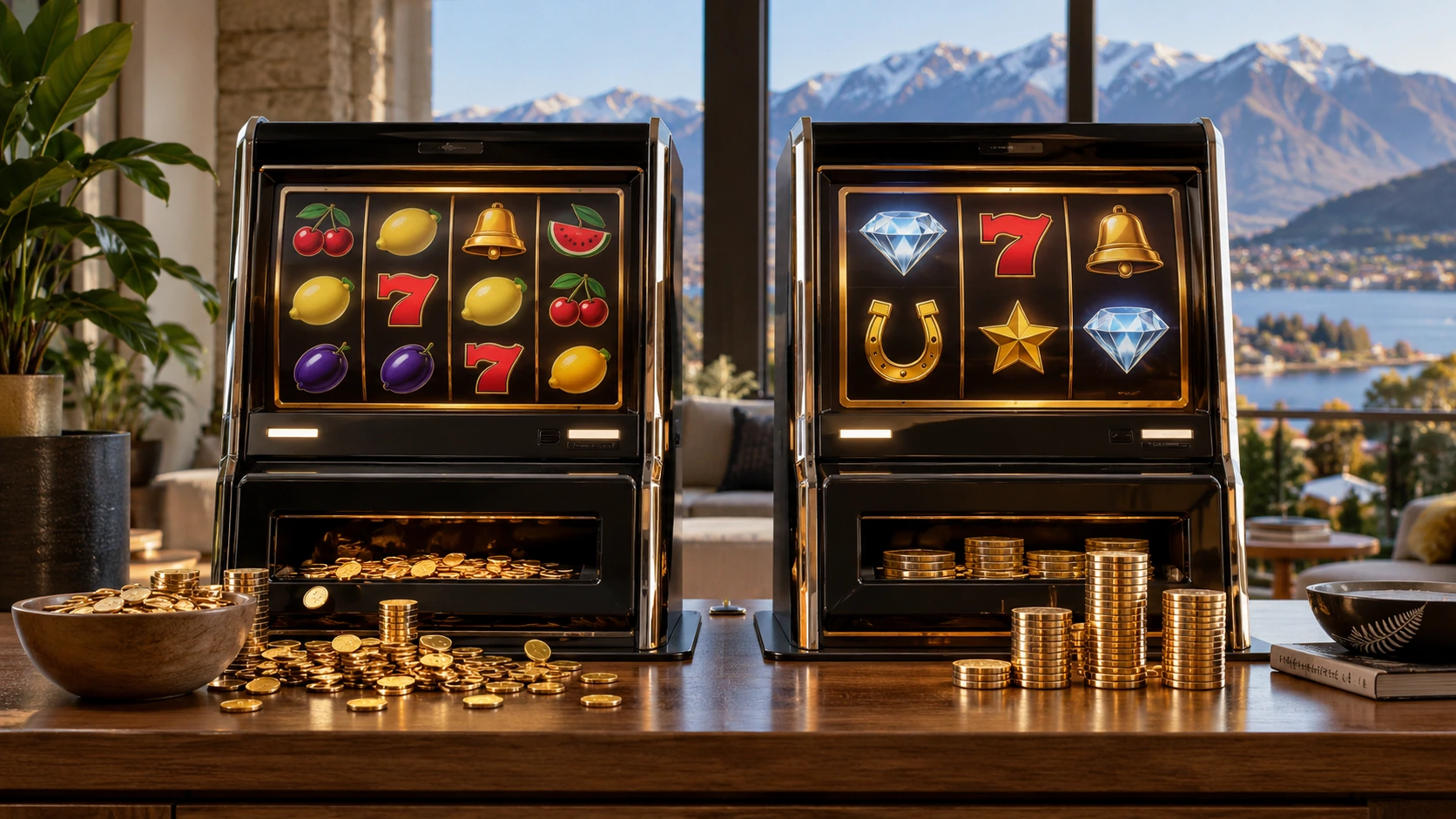
A pokie labelled 96% RTP does not owe you NZ$96 after you put in NZ$100. It describes the game's theoretical return to player across a very large volume of wagers - not your likely payout in a single session. That difference matters more than whether a game advertises a percentage one or two points higher than another.
RTP helps compare the expected cost of different games, but only when you also check the rules and stake. A 96% RTP pokie with rare, large prizes can behave very differently during a session from one that pays smaller amounts more often.

What does RTP actually measure?
Return to Player (RTP) is the proportion of total stakes a game is designed to return as prizes on average over the long run. The percentage comes from game mathematics: each possible outcome has a probability and a corresponding payout. Combining those outcomes gives the game's expected return.
A theoretical RTP of 96% implies a 4% house edge in an ordinary casino-banked game. The house edge is the expected share of turnover retained by the operator, not a fee deducted from each spin and not a prediction of the operator's profit on any particular night.
It measures money wagered and returned, not the proportion of players who finish ahead or the chance of winning the next spin.
How RTP is calculated - and why turnover changes everything
The calculation is:
RTP (%) = (total prizes returned ÷ total amount wagered) × 100.
The theoretical figure comes from the probability of each outcome and its prize. Dividing the payouts observed during play by the stakes gives an actual RTP, which may differ sharply in a short session.
Imagine many players collectively stake NZ$1,000,000 on a 96% RTP game. Its model implies approximately NZ$960,000 in prizes and NZ$40,000 in expected aggregate losses over sufficient play. Those returns are not shared equally: a rare jackpot may account for a large part of them.

Your deposit is not your turnover
Suppose you start with NZ$100 and make 200 spins at NZ$1 each. Your turnover is NZ$200 , even though you initially deposited only NZ$100: winnings may have been used to fund additional bets. At a 4% house edge, NZ$200 of turnover carries an expected loss of NZ$8. It is a statistical average, not a charge applied to your account.
Increasing the number of spins increases your exposure to the house edge. A lower bet size reduces the dollars exposed per spin but does not change the underlying RTP percentage for the same game configuration.
Why a 96% RTP game can return nothing in 50 spins
A session can return 0%, 40% or 130% of what you staked while the published RTP stays at 96%. The displayed percentage averages many possible outcomes; a single run captures only a fraction of them.
Variance explains the gap. A rare jackpot can carry substantial weight in the return model without appearing in your session, even after thousands of spins. The game has no deadline for making up a losing streak.
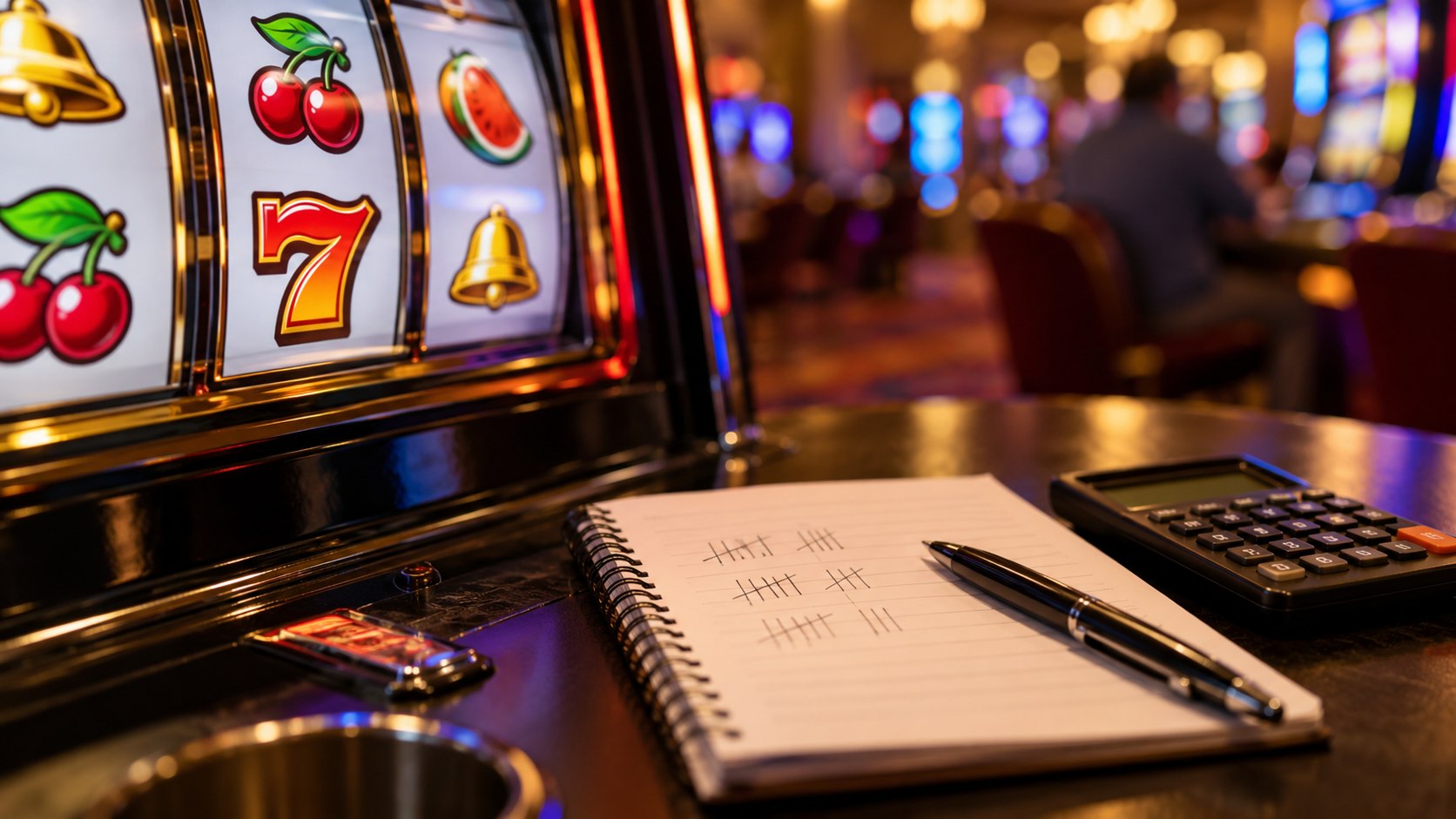
That is also why screenshots of one win, one losing session, or a short test of a pokie cannot reliably establish its RTP. A meaningful evaluation requires the game's mathematical specification or substantial, properly collected data, rather than a handful of spins.
RNG, reels and paylines: how the outcome is made

In a typical modern online pokie, a random number generator (RNG) selects an outcome for each game round according to the game's programmed probabilities. Reel animations make that outcome visible, but the visual stopping sequence is not a signal about what will happen next.
Game mathematics can use virtual reel strips , symbol weighting and reel mapping to make some combinations much rarer than others. A paytable then assigns prizes to qualifying combinations. Depending on the game, these might be counted along fixed paylines or across a specified number of ways to win . Wild symbols may substitute for others; scatter symbols can trigger features under stated rules.
On an independent-spin RNG slot, the previous results do not alter the probabilities of the next spin. Ten losing spins do not make a jackpot more likely on spin eleven. A near miss - for example, two jackpot symbols appearing alongside a third that almost lines up - is not evidence that the machine is warming up.
This independence rule applies to RNG pokies with independently determined rounds. Other gambling products may use different systems.
RTP, volatility and hit frequency are three different things
Two pokies with the same RTP can pay very differently. Volatility describes how unevenly prizes are distributed; hit frequency counts how often a qualifying win occurs. Neither measure, by itself, tells you how much money comes back.
| Measure | What it answers | What it cannot tell you |
|---|---|---|
| RTP | What share of total stakes is theoretically returned? | Whether your session will end ahead |
| Volatility | Are returns concentrated in rare large wins or more frequent smaller ones? | The exact timing of any win |
| Hit frequency | How often does a qualifying win occur under the game's definition? | Whether those wins cover the stake |
| Maximum win | What is the stated payout ceiling for a feature or round? | How likely that ceiling is to be reached |
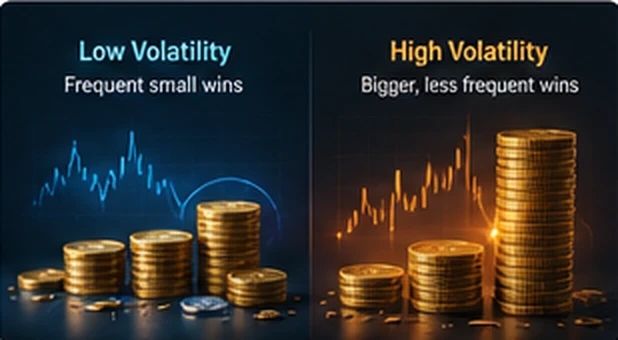
A low-volatility game may pay smaller prizes more regularly; a high-volatility game may concentrate much of its return in infrequent bonus events or jackpots. Neither arrangement guarantees a better result. A win can also be smaller than the cost of the spin: staking NZ$2 and receiving NZ$0.50 is still a net loss of NZ$1.50, even if lights and sounds celebrate it. Such outcomes are sometimes called losses disguised as wins .
Where bonus features fit into the RTP
The stated RTP generally covers the base game together with applicable free spins, bonus rounds, multipliers, wilds, scatters and jackpots. The published rules should explain any exceptions.
A free-spins round may account for much of the theoretical return even if it never triggers during your session. For a progressive jackpot , check both the RTP disclosure and the contribution and eligibility rules.
A maximum win of 10,000× your stake states the ceiling, not its probability. A bonus buy or optional feature may carry a different cost and RTP; check that mode separately.
Can the same pokie have different RTP percentages?
Yes. A game provider may create more than one approved RTP configuration for a title, and the version available through one operator may differ from another. Identical artwork, reels and a familiar game name are not sufficient proof that the mathematical settings match.
For titles from developers such as NetEnt, Pragmatic Play or Play'n GO, use the RTP shown in the game you can actually open , not a percentage copied into an affiliate listing. Check the help screen, paytable and any version or game-mode information.
Independent testing laboratories can check software and game mathematics against applicable standards. A certification concerns the assessed implementation; a badge on a review site is not sufficient proof.
What RTP means for New Zealand players
In New Zealand, pokies is the everyday name for gaming machines, but the rules for Class 4 gaming machines , machines in physical casinos and online casino platforms are not interchangeable. An overseas explanation of a machine's minimum payout must not be assumed to apply to every NZ product.
New Zealand's Online Casino Gambling (Minimum Standards) 2026 , administered by the Department of Internal Affairs (DIA) , require operators covered by those standards to make the theoretical RTP easily accessible on the gambling platform and present it as a percentage. Game rules and odds information must also be accessible under those standards. This is a specific regulatory requirement for platforms within their scope, not a universal minimum RTP for all pokies in New Zealand.
If you cannot find the figure, ask the operator where the configured RTP is disclosed rather than relying on an affiliate listing.
How to use an RTP figure without being misled
- Find the configured RTP in the game's help, information or paytable screen - not only in a third-party list.
- Check the game mode. Confirm whether bonus buys, jackpot contributions or other options alter the quoted figure.
- Compare like with like. RTP helps compare expected cost per dollar wagered; volatility and hit frequency describe different dimensions of risk.
- Calculate exposure using turnover. Multiply planned total stakes by the house edge for a rough expected-loss illustration; remember the actual result could be much worse.
- Set a spending and time limit before playing. RTP is not a strategy for recovering losses, and it cannot make gambling an income source.
For a 96% RTP game, NZ$500 in total stakes corresponds to a theoretical expected loss of NZ$20. For a 94% game, the comparable figure is NZ$30. That NZ$10 difference describes the mathematical expectation at equal turnover; it does not mean the first game will pay more during your session. Not gambling is the only way to avoid gambling losses entirely.
Common RTP questions
Does 97% RTP mean I have a 97% chance of winning?
No. RTP is a share of total wagered value returned as prizes, not the probability that any spin wins. The likelihood of a qualifying payout depends on the game's probability model and hit-frequency definition.
Is a pokie due to pay out after a long losing streak?
Not on an independent-spin RNG game. Earlier losses do not raise the next spin's chance of winning. Believing that a streak must soon reverse is the gambler's fallacy .
Does a higher RTP make a game safer?
Not necessarily. A higher RTP means a smaller theoretical house edge under comparable rules, but high volatility, large stakes, repeated wagering and long sessions can still produce substantial losses. It does not remove gambling harm risk.
Can blackjack or roulette be compared with pokies using RTP?
They can be compared in terms of theoretical house edge, but the assumptions differ. In blackjack, the expected return depends on rules and player decisions; roulette depends on the wheel and bet type. Baccarat, video poker, keno and bingo also have their own payout models. A single quoted RTP without its rules is not a complete comparison.
Can I test a pokie's RTP with a few hundred spins?
You can calculate your observed return, but a few hundred spins are generally not enough to verify the theoretical figure, particularly for volatile games with rare large prizes. Use the published game rules and credible technical evidence rather than short-session results.
Before comparing two pokies, check their configured RTP, wagering rules and volatility. The published return describes their mathematics, not the result of your next session.
For independent information about gambling-related harm in New Zealand, see Safer Gambling Aotearoa .