The slot shows a jackpot. The streamer celebrates, chat reacts and someone asks where to play. A casino link appears. Check whether the creator has a commercial deal with the operator and whether viewers can see the disclosure.
For viewers in New Zealand, a sponsorship label does not make otherwise prohibited online casino advertising legal. Nor does it show whether a streamer is wagering personal funds or credit supplied by an operator.
When a Casino Stream Becomes Advertising
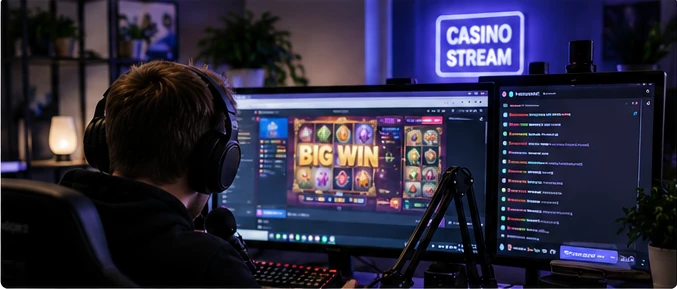
Casino streams show real or recorded play on Kick, Twitch, YouTube and other platforms: online slots, roulette, dice games and similar products. Some creators discuss gambling without payment. Others receive money, credit or services from an operator, affiliate network or marketing agency.
Sponsorship can mean a fee, gambling credit or another benefit exchanged for exposure. Advertising becomes harder to recognise when that arrangement is folded into apparently independent entertainment or personal advice. Viewers may hear a familiar creator's enthusiasm without knowing who benefits from it.
New Zealand's Advertising Standards Authority (ASA) looks beyond cash payments. Its guidance on identifying advertisements explains that advertiser control can be direct or indirect and that non-cash benefits may also be relevant. The decisive questions include whether the message is controlled by an advertiser and whether its advertising character is obvious to the audience.
How Sponsorship Is Built into a Gambling Stream

There may be no advert break at all. Branding appears in a stream title or overlay; a tracked link sits in the description, channel panel or pinned live-chat message. Clips can carry the same pitch to other social platforms.
Five arrangements viewers should distinguish
| Arrangement | How it works | What viewers cannot assume |
|---|---|---|
| Fixed sponsorship fee | A creator is paid to feature or discuss a casino during agreed content. | That the creator's comments are independent. |
| Affiliate or referral agreement | A tracked link, referral code or promo code attributes customers to the promoter; commission may follow. | That the link is an ordinary, unpaid recommendation. |
| Revenue share or CPA | Compensation may depend on referred customer activity or an agreed acquisition event. | That the creator's financial incentives end when a viewer clicks. |
| Provided bankroll or account credit | Funds or credit may be supplied under a promotional arrangement, sometimes with withdrawal conditions. | That every displayed stake represents the creator's personal financial exposure. |
| Branded placement | A logo, on-screen casino name, sponsored gameplay or repeated brand mention supplies exposure. | That a logo alone proves payment or an unlawful deal. |
A cost-per-acquisition (CPA) deal pays for a qualifying action; revenue share depends on agreed customer activity. A hybrid deal can combine both. The referral link does not reveal the contract. Supplied credit also leaves open who bears losses and whether winnings can be withdrawn.
Two streams may show identical stakes. If one creator is betting personal funds and another is using credit supplied under a contract, the financial risk behind the screen can be very different.
How Hidden Advertising Can Resemble Genuine Entertainment
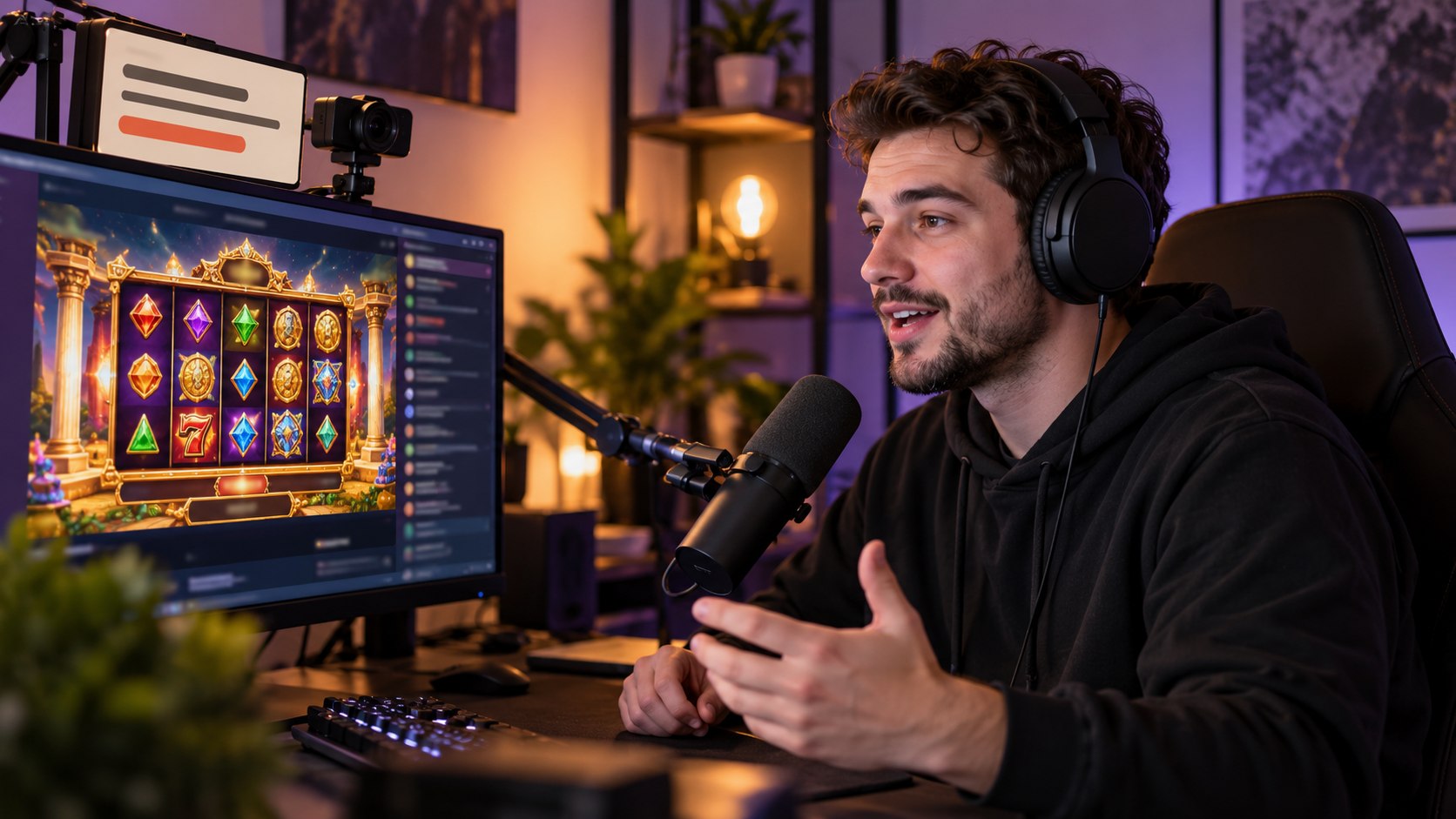
From live chat to a referral funnel
Consider a jackpot clip posted to TikTok, Instagram or YouTube Shorts. It leads to a longer Kick or YouTube stream, then a Discord community or live-chat message containing a casino code. The route can work as a referral funnel. But a clip, link or community invitation is not automatically an advert: the underlying commercial relationship and control still matter.
The pitch may sound like ordinary conversation. A streamer praises a slot during play, a sponsor logo remains quietly on screen, or an affiliate link is offered as an answer to a chat question. A disclosure buried in an old profile or separate terms page can be missed. ASA guidance says audiences should recognise an advertisement when they encounter it.
Why the winning moments are not the whole story
A winning clip rarely includes every losing spin. It may leave out earlier deposits, wagering requirements or a run of unsuccessful sessions. Even a genuine jackpot offers no sound basis for predicting what another player will win.
Return to player (RTP) describes a game's theoretical long-run payout; it does not predict an individual session. The house edge describes the casino's mathematical advantage under the game rules. Neither can be estimated from a few livestream spins, a large displayed balance or a dramatic win.
Trust, familiarity and social proof
Regular chat, jokes and familiar faces can create a parasocial relationship: viewers feel close to a creator they do not personally know. A busy comment feed supplies social proof. A countdown or limited-time offer can add fear of missing out (FOMO). Those are persuasive conditions, not proof that a particular streamer set out to deceive anyone.
How to Check Whether a Casino Stream Is Sponsored

Start with what the broadcast actually shows. Keep observations - links, labels, codes, account details - separate from guesses about a private sponsorship contract.
- Look for a direct disclosure. Check the stream title, the opening of a sponsored segment and any persistent label such as “Ad”, “Sponsored Content” or “Paid Promotion”. A vague “partner” reference may not explain what has been exchanged.
- Inspect the immediate context. A casino link in a description, pinned live-chat message or channel panel may be a referral route. Check whether the creator says they can benefit when viewers use it.
- Separate brand exposure from proof of a deal. An overlay or logo is a clue worth checking, not proof of payment, unlawful promotion or control over the stream.
- Ask what the bankroll represents. Is the session on a demo account, using personal money or using operator-provided credit? If the creator does not explain, the viewer cannot safely infer the level of financial risk.
- Check claims against full outcomes. A highlighted win does not establish profitability. Look for a complete and verifiable account of stakes, deposits, withdrawals and losses before drawing conclusions.
- Consider the audience and jurisdiction. A gambling operator having a website, a streaming presence or an overseas licence does not establish permission to advertise online casino gambling to New Zealanders.
A casino name, referral code and linked offer appearing together justify checking for a commercial relationship. They do not, by themselves, prove a breach.
NZ law: disclosure does not permit casino ads
A sponsorship label can reveal a commercial relationship; it does not make a restricted promotion permissible. For the current New Zealand rule and the responsibilities of creators and publishers, consult the Department of Internal Affairs' advertiser guidance .
The regime is transitional. The DIA expects a licensing process to lead to up to 15 licensed online casino operators being allowed restricted advertising in 2027. That future possibility does not permit sponsored casino promotion now. The Online Casino Gambling Regulations 2026, regulation 40, also set out prohibited advertising forms involving sponsorships, personal endorsements and affiliate arrangements under the licensed regime. A future licence should not be mistaken for an unrestricted right to pay creators for casino endorsements.
New Zealand's Gambling Advertising Code requires gambling advertising within its scope to be socially responsible and truthful, without misleading claims about winning chances or prizes. Its standards do not override statutory prohibitions. An age gate, responsible-gambling message or prominent sponsorship label likewise cannot cure advertising that the law prohibits.
Watching an overseas stream, operating a casino and targeting NZ customers with an advert are different activities. A worldwide stream being accessible in New Zealand does not, on its own, determine legal liability. The promotional conduct and its connection to the NZ market need examining.
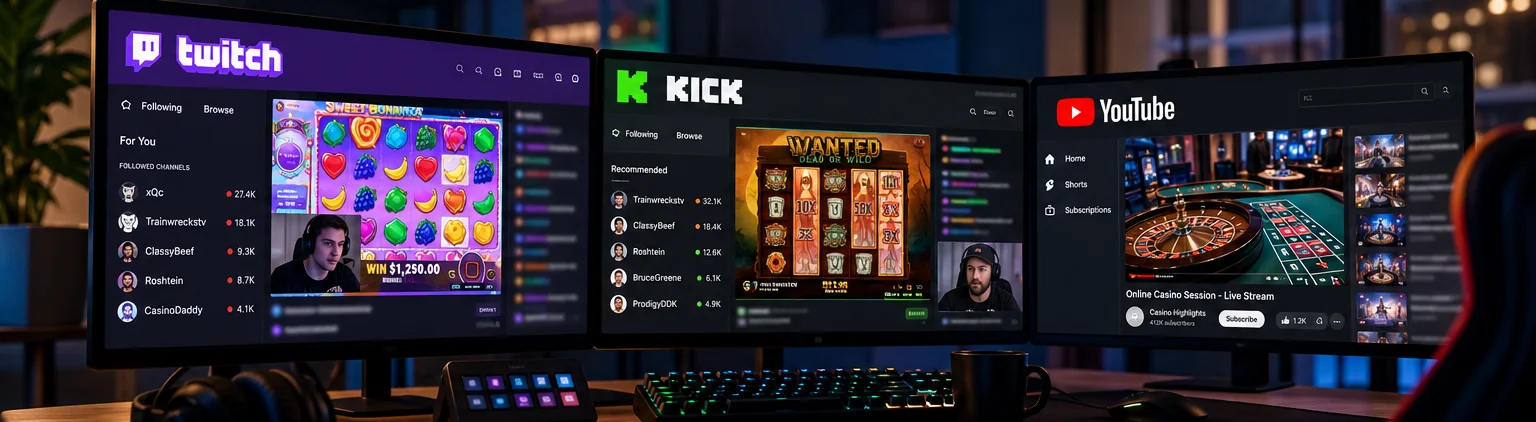
Twitch, Kick and YouTube Apply Different Rules
| Platform | Relevant policy distinction | Implication |
|---|---|---|
| Kick | Its community guidelines require clear sponsorship and affiliate disclosures, appropriate 18+ labels and compliance with local gambling law; sponsored gambling is limited to appropriately licensed platforms. | A permitted stream category does not create a NZ advertising exemption. |
| Twitch | Branded-content rules require a disclosure tool for qualifying promotions and prohibit risky gambling branded content, including promotion of online slots or roulette websites. Other gambling restrictions also apply. | A branded-content tag does not override forbidden promotion. |
| YouTube | Paid-promotion declarations and gambling-content restrictions address different issues. YouTube restricts directing viewers to gambling sites not certified by Google and may age-restrict relevant casino content. | A paid-promotion declaration does not mean linked gambling services are permitted. |
Platform policies can change. A stream remaining online is not proof that its promotion complies with New Zealand law.
Risks Viewers May Not See Until After a Stream
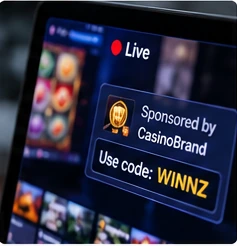
A paid streamer may face less financial exposure than viewers following a referral link. Even authentic winning clips can hide an overall loss.
Rapid wagers and repeated high-stakes wins can make risky betting seem routine. Clips may reach younger people on general social platforms before they ever see an age-restricted stream. An 18+ label cannot control every repost.
For viewers who notice gambling is affecting their finances, relationships or wellbeing, the useful next step is not to compare more winning clips. Stop following referral prompts, avoid depositing in response to livestream excitement and seek independent support. The New Zealand Gambling Helpline provides support for gambling-related harm.
Reporting a Suspected Hidden Casino Advertisement in NZ
Evidence is more useful than assumptions about motive. Preserve the stream URL, account name, broadcast date, screenshots of the promotion, the exact wording of any disclosure and any relevant pinned messages or affiliate links. Distinguish what was visible from what you suspect about payment or sponsorship.
For suspected unlawful online casino advertising aimed at New Zealand audiences, the DIA invites reports at onlinegambling@dia.govt.nz. Possible breaches of advertising identification standards may also be raised through the ASA complaints process. A complaint should identify the specific material rather than declare a creator guilty without verification.
Common Questions About Sponsored Casino Streams
Does a casino streamer have to say they are paid?
Advertising should be identifiable under applicable ASA standards, including when non-cash benefits or advertiser control are involved. In New Zealand, disclosure cannot authorise a prohibited casino promotion.
Can streamers advertise offshore casinos in NZ?
No. An overseas licence does not authorise casino advertising targeting New Zealanders under the October 2026 rules.
Are referral codes evidence of hidden sponsorship?
A code suggests that an affiliate or other commercial relationship is worth checking. It does not disclose the contract's terms or prove that the creator receives a particular commission.
Do streamers gamble with their own money?
Not necessarily. Some creators use personal funds; others play with supplied credit or under different account conditions. The on-screen balance alone cannot prove what was deposited, what can be withdrawn or who absorbs losses.