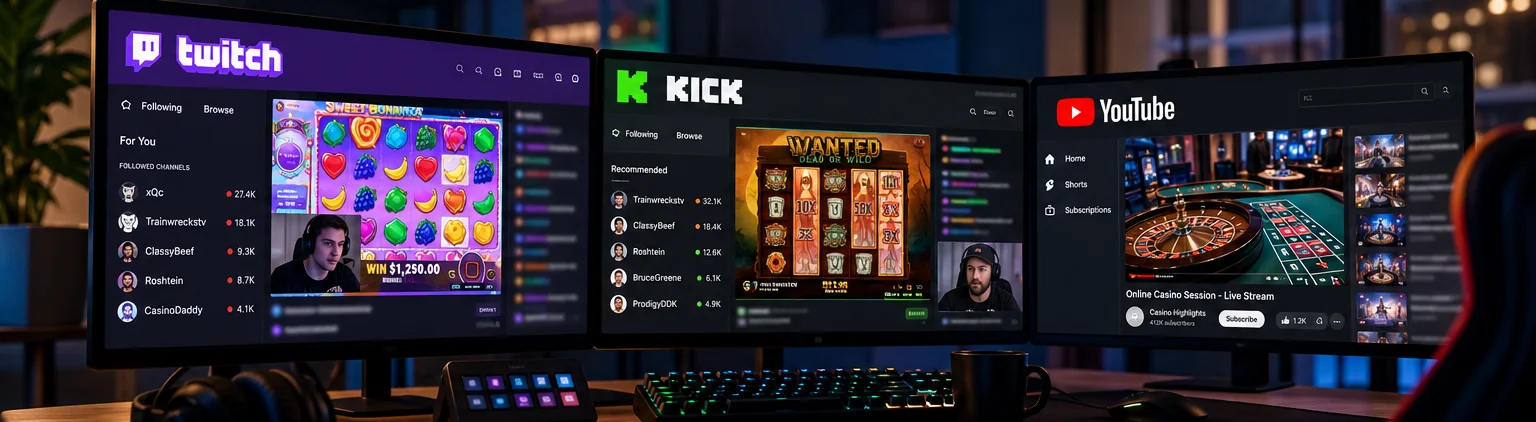
A casino streamer might wager $1,000 a spin with $100,000 showing in the account. Yet the money on screen may not be theirs to lose. Before drawing conclusions from a big win, ask three questions: Who supplied the bankroll? Who pays for a losing session? Can the winnings be withdrawn?
“Fake money” gets used loosely in casino streaming. It might mean virtual demo credits, an operator-funded account or a misleading edit of otherwise genuine gameplay. Those situations carry different consequences, especially for someone in New Zealand tempted to copy the stakes.

What counts as fake money on a casino stream?
Demo mode uses virtual credits. A slot can show a growing balance and trigger bonus rounds, but the credits and simulated winnings are not cash. Demo versions on game previews and social-casino products may help someone understand the controls or paylines. Nobody has earned a withdrawable payout from those demo spins.
A sponsored balance could involve real wagers. The casino or another partner supplies the funds, while a private agreement determines who absorbs losses, whether the balance can be reloaded and how much the creator may cash out. It is not necessarily demo play.
A personal bankroll comes from the streamer’s own deposits. But sponsorship fees, rebates or reimbursement may still offset losses. “Real money” describes the account; it may not describe the final cost to its owner.

Demo balance vs sponsored balance vs real-money bankroll
| Balance type | Source of funds | Can winnings be cashed out? | What remains uncertain? |
|---|---|---|---|
| Demo or play-money credits | Virtual, non-cash credits | No, not as real-money winnings | Whether demo settings match a particular real-money version |
| Casino-funded or sponsored bankroll | Operator-provided funds or credits | Depends on the account and contract | Withdrawal rights, reloads, loss coverage and ownership |
| Personal real-money bankroll | Creator’s own deposited money | Potentially, subject to standard account rules | Outside sponsorship, rebates or other compensation |
| Mixed bankroll | Personal deposits plus promotional or sponsored funds | Depends on which portion is cashable | The split between restricted credits and withdrawable cash |
A number beside the spin button tells you the account balance, not who owns it or how much the streamer has made. “Raw balance” is sometimes used to suggest ordinary cash deposits, but the phrase is not independently certified.
How casino-funded balances change the economics
Casino-streaming deals vary. One creator might receive a flat appearance fee; another gets a funded account, regular top-ups or payments tied to referrals. Affiliate arrangements may pay per new customer (CPA) or share revenue generated by referred players. That gives referral links and promo codes a financial purpose beyond convenience.
Take two $1,000 spins from accounts showing $50,000. In one case, the creator deposited every dollar and carries the loss. In the other, an operator funded the account and covers it. The screen shows the same wager; the people involved face very different financial consequences.
A sponsored account might allow the creator to withdraw part of the profit, none of it or only a separately negotiated payment. Contracts may also specify streaming hours. Without an authentic contract or transaction record, the precise deal remains unknown.
Why big wins don't prove typical gambling results
High-stakes pokies, bonus buys and “max win” clips get attention. Casino streams feature games from NoLimit City, Hacksaw Gaming, Pragmatic Play and Play’n GO , including titles such as Gonzo’s Quest , Rise of Merlin and Brute Force . A familiar title tells you nothing about who paid for the session.
Return to player (RTP) is a long-run theoretical average across wagers. The house edge reflects the operator’s corresponding long-run advantage; volatility describes how sharply results can swing. Digital slots commonly use an RNG (random number generator). None of those game mechanics reveals whether the player deposited the money personally.
At a hypothetical 96% RTP, $10,000 wagered implies $9,600 in theoretical returns and $400 in expected losses across many wagers. It does not promise a $9,600 cash-out. High-volatility games can vary wildly over a single session. Nor does $10,000 of turnover mean someone deposited $10,000: the same funds can be wagered repeatedly.
Highlights introduce selection bias . A clip might show a $100,000 win while leaving out hours of losses or account reloads. Profit requires a fuller record: starting balance, deposits, withdrawals and the balance at the end.

Can you tell if a casino streamer uses demo credits?
A “demo” or “fun play” label can settle whether the credits are virtual. Without that label, even a complete recording may not reveal who funded the account. A few checks can narrow the uncertainty.
- Identify the explicit claim. Does the creator say “demo,” “sponsored,” “casino-funded,” “my own money,” or nothing at all? A sponsorship disclaimer confirms a commercial relationship, not the exact funding mechanics.
- Look for account context. A demo label, restricted-credit balance, deposit history or terms shown during a full stream may help. A cropped screenshot or dramatic reaction does not establish withdrawal eligibility.
- Compare the full VOD with highlights. On Kick, Twitch or YouTube, a complete video-on-demand recording may reveal balance resets, top-ups or long losing periods that short clips omit. Even a full VOD cannot expose private payment agreements.
- Ask who carries the downside. Are losses reimbursed? Is the bankroll reloaded? Can the creator cash out profits? These are more revealing questions than whether the slot animation looks authentic.
- Separate evidence from rumours. A verifiable public disclosure, authentic account rules or attributable contract statement is stronger than anonymous accusations, an edited clip or a viral thread.
A withdrawal button proves little about ownership. Unless the creator shares reliable account records or relevant contract terms, the funding model may simply remain unverified. That is different from proving fraud.
What sponsorship disclosures actually tell viewers
Casino-streaming coverage often mentions Roshtein, Trainwreckstv, xQc, AyeZee and Adin Ross, as well as operators such as Stake, Roobet, Rainbet, BC.GAME, Rollbit and Gamdom. Their appearance in streaming coverage is not evidence that any of them used fake balances. Allegations shared on YouTube or commentary sites still need independent verification.
On Kick , the platform’s guidance calls for gambling streams to carry an 18+ label, use an appropriate Slots & Casino category, disclose sponsorships visually and audibly, comply with local gambling laws and avoid viewer-funded buy-ins. These are content and platform requirements; they do not certify a bankroll as genuine. Twitch and YouTube have their own gambling and paid-promotion rules, which may change by service and jurisdiction. Rumble and other hosts should not be assumed to use Kick’s requirements.
“Paid promotion” tells viewers there is a commercial relationship. It does not tell them whether the bankroll was supplied, whether winnings are withdrawable or whether a chat link pays the creator for sign-ups. Those details matter when judging the apparent stakes.
Footage can also be edited selectively or manipulated with an overlay. That calls for separate evidence; it does not follow merely from sponsorship or demo mode.

What New Zealand viewers need to know
Who funds the balance and who bears any losses are separate from whether a casino promotion is permitted in the viewer's country. A disclosed or sponsored bankroll cannot establish local authorisation; New Zealand viewers can check the Department of Internal Affairs' advertiser guidance .
For New Zealand viewers, a referral link or promo code in a stream may amount to advertising. Whether a broadcast complies with local law depends on its content and targeting. Access to a foreign stream does not make the promotion lawful in New Zealand. Nor does an overseas gambling licence count as a New Zealand licence.
The Gambling Act 2003 remains part of the wider legal context. Rules may evolve as the new framework is implemented, so regulatory claims should be checked against the DIA’s current guidance rather than a streamer’s description or an old affiliate review.
When a convincing stream can still be misleading
Two live roulette streams might each show $20,000 in wagers. One player risks their savings; the other receives promotional funds and an appearance fee. The pictures cannot tell those stories apart. Blackjack and live roulette have different mechanics from RNG slots, but the bankroll question is unchanged.
Regular viewers can develop parasocial trust in a streamer and take their reactions at face value. The excitement might be sincere while the losses are subsidised. Familiarity still says nothing about the contract.
Do not set a personal gambling budget by copying a streamer’s wagers or apparent winnings. Some social-casino credits even look like NZD despite having no cash redemption value. Check what the numbers actually represent.
Frequently asked questions
Is a sponsored casino balance fake money?
Not necessarily. It may support real wagers but be funded, restricted or reimbursed by the operator. “Fake” is an imprecise label unless the credits are simulated or the presentation makes a provably false claim.
Can you withdraw winnings from a demo balance?
No. Ordinary demo credits and their simulated winnings are not redeemable for cash. A separate promotional account may have different conditions, which should not be confused with demo mode.
Can a casino streamer cash out a sponsored bankroll?
Sometimes, depending on the sponsorship agreement and account rules. A visible account balance does not establish whether the principal, profits or either is withdrawable.
Are huge wins evidence that the streamer uses real money?
No. Large multipliers can appear in demo play and in real wagering. The source of funds and the streamer's actual net result require separate evidence.
Does a 96% RTP mean I will get back 96% of my money?
No. RTP is a long-run theoretical average, not a personal refund rate or a promise for one gambling session. Volatility means actual results can be much better or worse.
Are casino streams on Kick legal for New Zealand viewers?
Simply watching a stream and advertising or promoting an online casino are different activities. Kick platform labels do not override New Zealand law. DIA guidance states that online-casino advertising to New Zealanders is prohibited during the current licensing transition.
How can I assess a streamer's claimed raw balance?
Ask what the term means for that account: personal deposits, restrictions, operator credits and reimbursement. Treat it as an unverified description until supported by useful evidence.
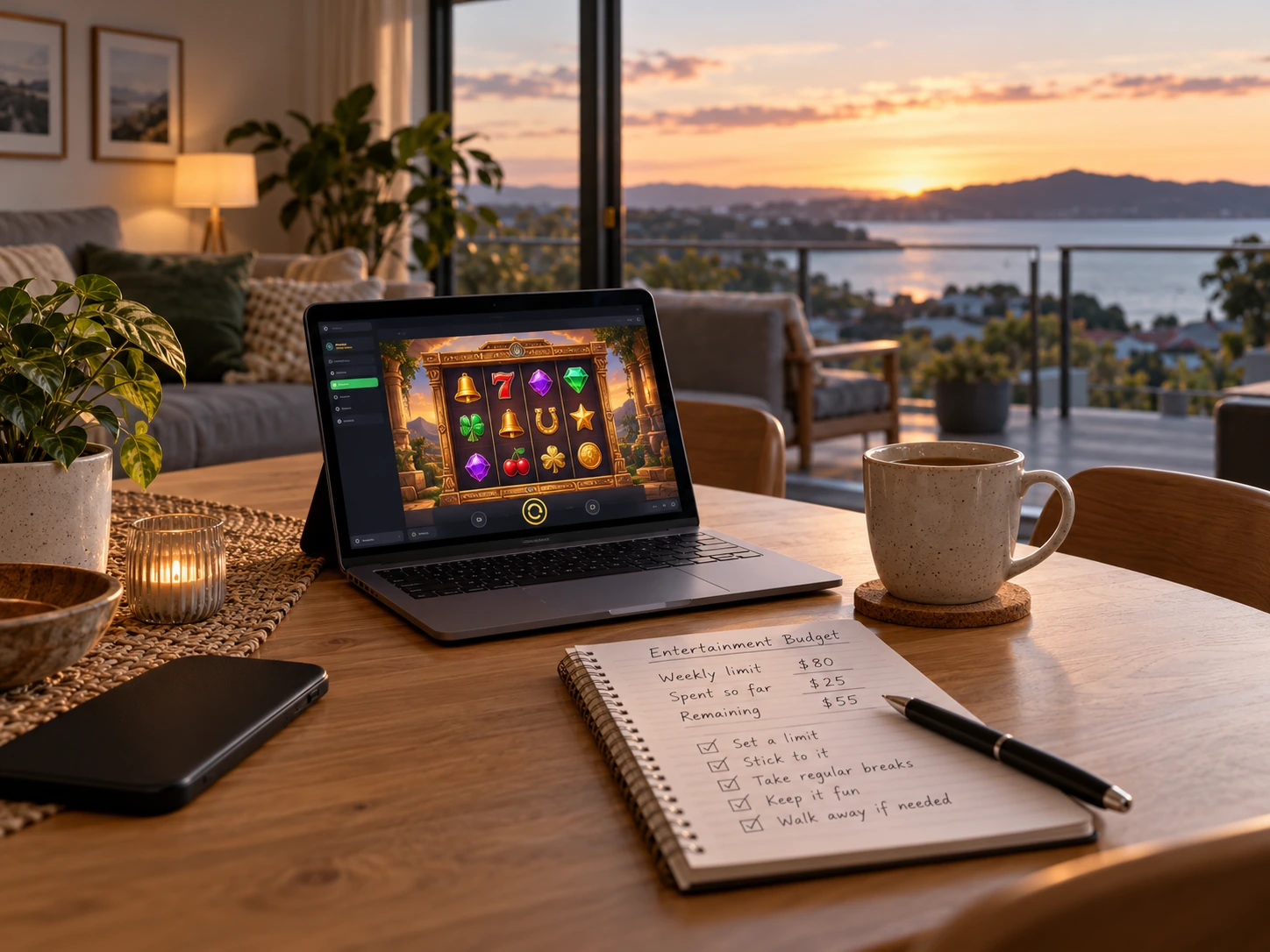
Keeping gambling content in perspective
Casino streams are entertainment, not a picture of an ordinary player’s finances. If watching makes it harder to stick to a budget or encourages chasing losses, close the stream rather than copying the wager.
For free, confidential help, contact Gambling Helpline New Zealand . For platform rules, consult Kick’s gambling content labels guidance. New Zealand gambling rules are outlined in the DIA’s information for New Zealand players.