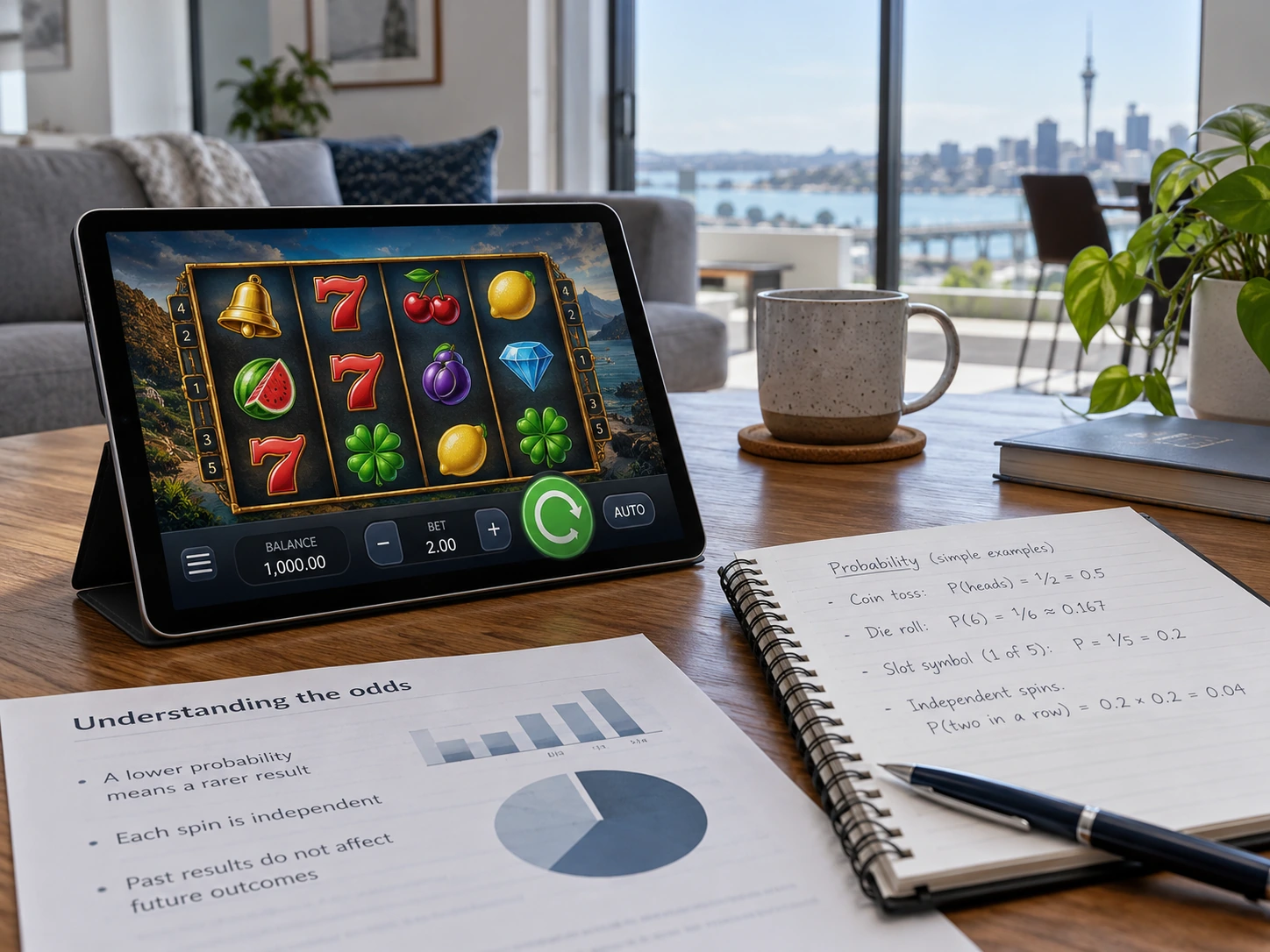
After a NZ$200 losing streak on a pokie, the next ordinary spin is no more likely to win. The same logic applies to lottery numbers that haven't appeared for months. Sports-betting streaks are different - they may reflect skill, luck or both - but a handful of winning bets proves little about long-term profit.
A useful fact-check asks one question: what, exactly, changes the odds? A game's rules or payout terms can matter. So can new information about a sporting event. A streak, lucky ritual or strong feeling does not change an independent random result.
| Claim | Verdict | What matters |
|---|---|---|
| “A losing pokie is due to pay.” | False | Independent spins do not carry a debt to the player. |
| “A 95% RTP means I get $95 back from $100.” | False | RTP describes a long-run theoretical average, not one session. |
| “A near miss predicts a jackpot.” | False | It is a non-winning result, not a forecast. |
| “More bets always improve my financial result.” | False | More exposure generally increases the amount at risk. |
| “Skill never matters in gambling.” | Misleading | Some games include skill, but skill does not remove uncertainty or costs. |
| “Only people with an addiction experience harm.” | False | Families, whānau and other affected people can experience harm too. |
Why gambling myths can feel true
The gambler’s fallacy treats independent losses as if a win must be coming. The hot-hand belief runs the other way: a streak of wins feels like evidence that the next one will follow. Neither changes a fair random draw.
Five heads in a row may look unusual. Yet on a fair coin, the sixth flip is still 50 - 50. The odds of predicting a six-flip sequence in advance are not the same as the odds of the next flip after five outcomes are already known.
Pokie sounds and animations can make a small payout feel like a success even when it is less than the stake. Near-miss symbols have a similar pull: visually close, mathematically still a loss. PGF Services explains how these experiences can encourage continued play.
Myth 1: “Pokies are due after a long losing streak”
Verdict: False for independent RNG outcomes. Pokies, or electronic gaming machines (EGMs), use a random number generator (RNG) to determine outcomes. One ordinary spin does not owe anything to the player who lost on the previous one.
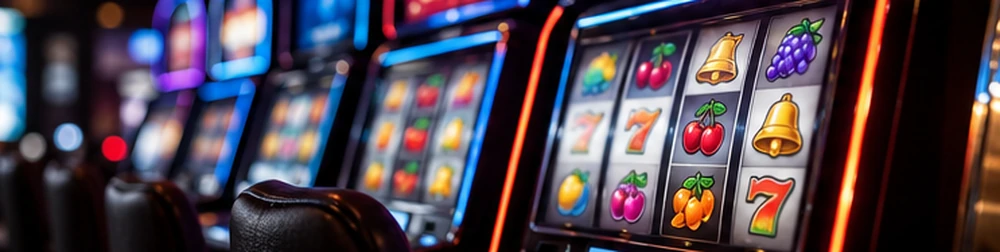
A supposedly “hot” or “cold” machine tells you nothing reliable about the next independent spin. There is a narrow exception worth checking rather than guessing: disclosed persistent bonuses, progressive jackpots and other state-dependent features may alter a game's conditions. Their published rules - not the previous player's losses - determine whether anything has changed.
Check the paytable and game rules. Is there an explicit mechanic that changes the game's state? If not, the pattern is just a pattern. GambleAware's explanation of poker machines sets out the distinction.
Myth 2: “Return to player guarantees most of my money back”
Verdict: False. Return to player (RTP) describes a theoretical, long-run share of total stakes paid back by a game. It is not an individual refund. The house edge is the expected share the game retains under the applicable rules.
Take a hypothetical game with 95% RTP. Across a large volume of wagers, the expected return is NZ$95 per NZ$100 staked, or an expected loss of NZ$5. A single session might end far above or below that figure because of variance .
At NZ$2 per spin for 100 spins, turnover reaches NZ$200. Even if winnings are reused and the initial deposit was smaller, the hypothetical expected loss at 95% RTP is NZ$10. Deposit size alone can hide how much was actually wagered.
Australian pokie payout rules should not be assumed to apply in Aotearoa New Zealand. Check the rules for the relevant NZ product and venue.
Myth 3: Near misses and lucky numbers change the odds
Verdict: False for independent games of chance. A near miss is a loss that looks close to a win. Neither its appearance nor a lucky charm changes the next independent draw. Where a stop button only changes reel-display timing, pressing it at a chosen moment cannot alter the underlying outcome.
For draw-based games such as Lotto NZ , choosing a birthday, repeating a set of numbers or avoiding recently drawn numbers does not make that combination intrinsically more likely to be selected, assuming a fair draw. In games with a shared prize pool, popular number choices can affect the chance of splitting a prize if you win ; they do not improve the chance that the numbers are drawn. This distinction is often missed.
Instant Kiwi scratch games and Keno have their own published odds. Their prize structures differ from Lotto NZ, but a player's preferred numbers or rituals cannot rewrite a random draw. The Responsible Gambling Council documents similar myths.
Myth 4: Betting systems guarantee income
Verdict: False. Under the Martingale system , a gambler doubles the stake after each loss. Starting at NZ$10, six losses cost NZ$630; the next required stake is NZ$640. Bankroll limits and table limits can end the sequence long before the promised recovery.
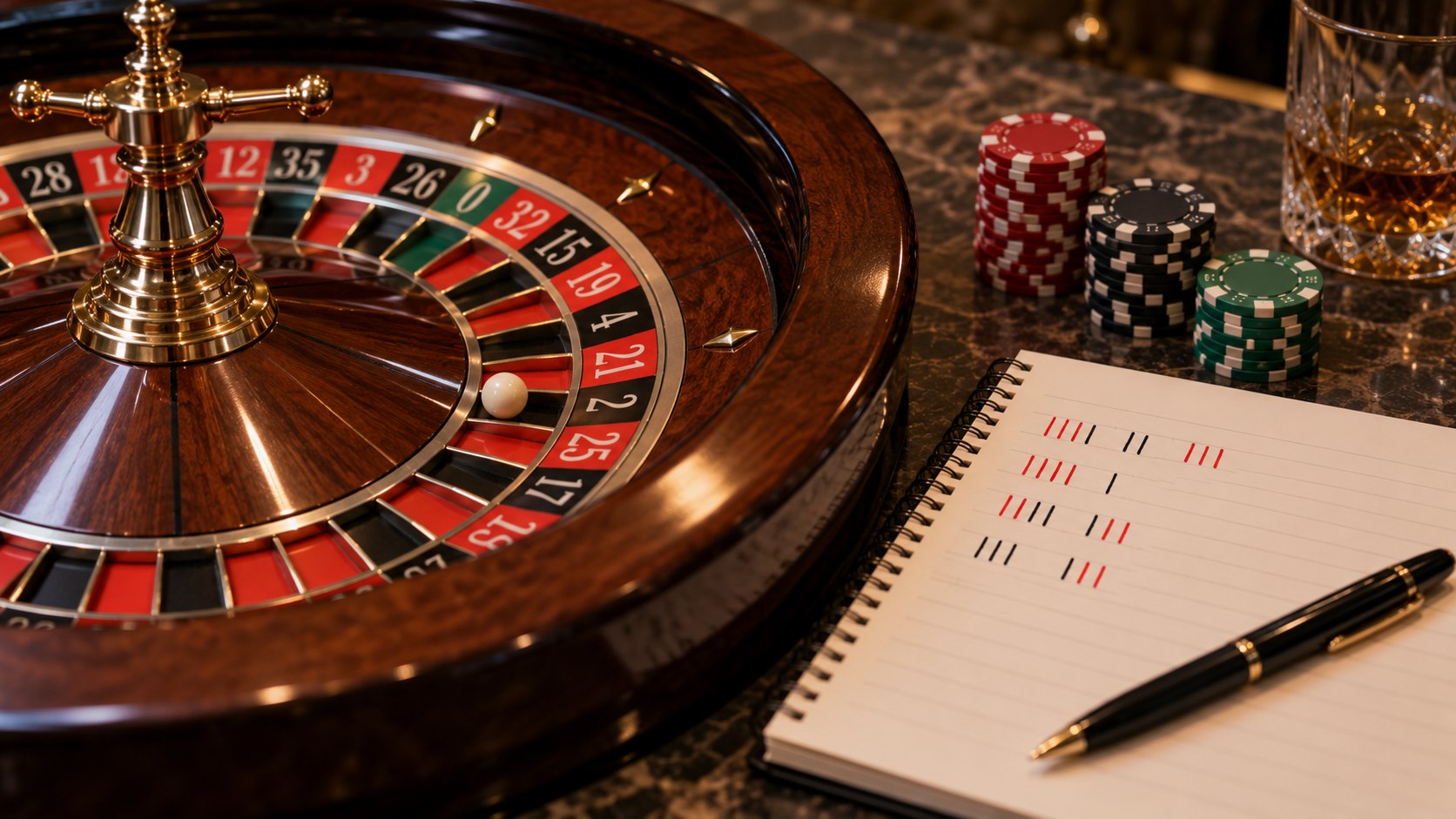
Staking patterns cannot remove a game's house edge . Betting on both red and black in roulette is not a loophole: zero, and double zero on some wheels, are losing outcomes for both bets. Genuine arbitrage would require independently verifiable prices covering every outcome after conditions and costs; it is not the same as a betting system.
Gambling is not a dependable way to pay rent, clear debt or replace wages.
Myth 5: More bets raise chances without removing risk
Verdict: Misleading. More distinct lottery tickets raise the chance of at least one winning ticket, but cost more. More pokies or more combinations increase exposure, not the expected return per dollar on the same game. Higher stakes can change jackpot eligibility under some game rules; they do not automatically improve expected profit.
A sports multi bet must land every leg to win. Adding legs can raise the advertised payout while lowering the chance of success. The relevant figures are implied probability and the combined price, not the size of the possible return.
Do not confuse a better chance of some payout with a better expected net result. Frequent small wins can still add up to a loss.
Myth 6: Knowledge removes gambling risk
Verdict: False, but skill does matter in some games. Poker , some forms of blackjack , sports betting, horse racing and TAB betting involve decisions or information. A capable player may have an advantage in particular conditions. That is not a guarantee for the next hand, race or match.
In fixed-odds betting, the central question is whether the offered price is better than a defensible estimate of the event's true probability, after bookmaker margin and transaction constraints. In poker, opponent decisions, rake, bankroll size and variance matter. In blackjack, rules, strategy and countermeasures affect the theoretical advantage. Claims of a “sure bet” should be supported by a complete, independently checkable calculation and explicit limitations.
Short winning runs happen by chance, too. Screenshots that show wins but omit losses, fees, cancelled bets or account limits cannot establish whether a system makes money.
Myth 7: Offshore casinos have NZ licences
Verdict: False. An overseas licence badge, polished interface or working payment method does not establish New Zealand authorisation. The Department of Internal Affairs (DIA) oversees the local framework, including implementation of the Online Casino Gambling Act 2026 .
As of October 2026, the new Act is in force, but the full licensed online-casino regime is scheduled to become operational in 2027. During the transition, existing providers face specified conditions, new market entry is restricted and online-casino advertising to New Zealand customers is prohibited. Being able to access an offshore gambling website therefore must not be confused with holding a New Zealand-issued online-casino licence. See the DIA's information for players and regulatory status updates for the applicable stage of implementation.
The rules also differ for land-based casinos, Class 4 gambling in pubs and clubs, Lotto NZ and TAB NZ . One generic claim about “legal gambling” cannot cover all of them.
Check DIA's current guidance for the specific gambling product and provider. A licence claim is meaningful only if it matches the activity and the stage of the regulatory rollout.
Myth 8: “Only people with gambling disorder can be harmed”
Verdict: False. Gambling disorder is a clinical condition; gambling harm covers more. Loss of savings, stress, anxiety, reduced time at work or study, and conflict at home can affect a player as well as partners, children, friends and whānau.

New Zealand's Gambling Act 2003 explicitly encompasses personal, social and economic harm extending to family, whānau and communities. The Ministry of Health's measurement guidance describes both the Problem Gambling Severity Index (PGSI) , which categorises risk, and the Short Gambling Harm Screen (SGHS) , which measures experienced harms. Neither should be used casually to diagnose another person.
The 2023/24 New Zealand Gambling Survey (NZGS) reported that 8.3% of adults experienced some level of gambling-related harm in the previous 12 months, as summarised by the Ministry of Health. That is a population estimate with a stated survey period, not a prediction that 8.3% of every group or every gambling product has the same risk. The Kupe Data Explorer and Ministry research offer more detail on how such measures are analysed. Official NZ gambling harm overview .
Research identifies uneven gambling-harm exposure across some Māori, Pacific and Asian communities, younger groups and people experiencing economic disadvantage. These are population patterns, not predictions about an individual. Product access, circumstances and support matter more than stereotypes.
Myth 9: A budget prevents gambling harm
Verdict: Incomplete. A spending cap may limit financial losses without addressing lost sleep, preoccupation or strain on relationships. Money is only one part of gambling harm.
Chasing losses means returning to gamble or increasing stakes to recover money already lost. It can turn one bad session into a series of larger risks. The next independent bet does not become more favourable because the previous one failed.
Deposit and time limits, spending records, breaks and self-exclusion can reduce access or exposure where offered. They do not change the odds, and counselling may still be needed when stopping feels difficult.
How to fact-check an unfamiliar gambling claim
- Name the exact game and rule. Is it a lottery draw, a roulette spin, a pokie bonus, poker against opponents or a live sporting event? Probability mechanisms differ.
- Identify the claimed advantage. Does it change the chance of winning, the amount paid for a win, or merely the player's feeling of control?
- Check independence. A streak is irrelevant to the next independent result; a disclosed stateful game feature is a separate question.
- Calculate the full cost. Include stakes, repeated turnover, fees, bookmaker margin, shared jackpots and potential stake limits.
- Seek a reproducible source. Prefer game rules, independently tested technical standards, government research and methodologically transparent evidence - not testimonials or selected wins.
- Check the NZ context and date. Law, product availability and operator status can change. Overseas rules or research may be informative without applying directly to New Zealand.
“Guaranteed”, “due”, “secret pattern” and “risk-free” are warning signs. Ask what evidence would disprove the claim and whether the seller shows losing results alongside wins.
When a gambling belief becomes a practical problem
Checking live odds compulsively, borrowing to bet, hiding losses or counting on the next win to cover essentials are reasons to seek help rather than test another system. New Zealand's harm-minimisation approach involves the Ministry of Health and Health New Zealand - Te Whatu Ora .
Help can involve financial conversations, counselling, practical barriers to gambling and support for family or whānau. PGF Services provides information and support in New Zealand. A formal diagnosis is not required to ask for help.
If losses are mounting, stop pursuing a target amount, check the net spending record and speak to someone independent of the gambling provider.
Frequently asked questions
Can pokies be manipulated by choosing when to spin?
A time-of-day pattern or precisely timed button press does not predict the next independent RNG outcome. Game-specific bonus rules should be checked separately; no timing ritual guarantees a payout.
Does a larger jackpot mean a better chance of winning?
Not necessarily. Jackpot size and jackpot probability are different variables. A progressive prize may grow while its winning conditions remain unchanged. Read the game's stated rules and eligibility requirements.
Are all gambling websites legal and safe in New Zealand?
No. Access from New Zealand does not establish NZ authorisation or consumer protection. The online-casino licensing framework is being implemented in stages, with full operation expected in 2027; check current DIA guidance before trusting a licensing claim.
Is gambling riskier than a lottery ticket?
Risk depends on frequency, amount spent, accessibility, game design and personal circumstances. A once-off lottery purchase and repeated high-speed electronic gambling involve different exposure, but neither automatically proves a person will or will not experience harm.
Fact-checks and personal wins are different
A winning story describes what happened once. A fact-check asks whether the claimed mechanism works across comparable attempts, includes losing outcomes, and remains valid under the actual odds and rules.